
The Agentic Marketing Playbook: What I Learned From Sidharth Gopalkrishnan of Netcore
Marketing is entering one of those rare moments where the tools are changing quickly, but the underlying business problems remain exactly the same. How do we acquire the right customer? How do we retain them? How do we make every interaction more relevant without overwhelming them?
In my conversation with Sidharth Gopalkrishnan, COO of Netcore, I wanted to go beyond the buzzword of Agentic AI and understand what it really means for a marketing leader building an omnichannel business.
About the Guest: Sidharth Gopalkrishnan is the COO of Netcore, a leading customer engagement and marketing technology platform, where he drives strategy on AI-led marketing transformation and enterprise partnerships, including Netcore's collaboration with Google Cloud.
What stayed with me is this: agentic marketing is not about running more campaigns, creating more segments, or adding another dashboard. It is about using AI agents to solve business problems that marketers have struggled with for generations.
Table of Contents
- Why Agentic Marketing Matters Now
- Omnichannel Is a Continuous Customer Conversation
- The Hidden Cost of Ad Waste
- The Five-Layer Agentic Marketing Framework
- What Adoption Actually Looks Like
- Build, Buy, and Let Agents Collaborate
- Three Mistakes to Avoid in Agentic Marketing
- Every Channel Can Become a Conversion Channel
- The Marketer of the Future Is a 10x Marketer
- Where Agentic Marketing Is Today
Why Agentic Marketing Matters Now
Netcore has spent 25 years evolving alongside marketing itself. It began with email, expanded into multichannel communication, then customer engagement, recommendations, search, app experiences, and now agentic marketing.
Sidharth explained that the original pain points have not gone away. Marketers still struggle to achieve true one-to-one personalization. There are limits to the number of segments teams can create, the amount of content they can produce, and the customer context they can use at a given moment.
Take a bank with 50 products and limited real estate on its app. Which product gets visibility, for which customer, at which moment? Every product team has a priority. Every marketer wants to communicate. Yet too much communication is itself a problem.
“Agentic marketing is the new way of solving impossible problems that marketers have faced for generations.”
The shift became possible because AI can now process massive amounts of real-time data, synthesize patterns, make recommendations, and increasingly create content. The move is from simple automation toward intelligence and decisioning.
That is also why Netcore worked with Google Cloud to imagine a platform where infrastructure, data, content generation, customer engagement, and marketing activation can work together. The objective is not to replace the marketer. It is to let agents do the heavy lifting while humans define the right business problem.
Omnichannel Is a Continuous Customer Conversation
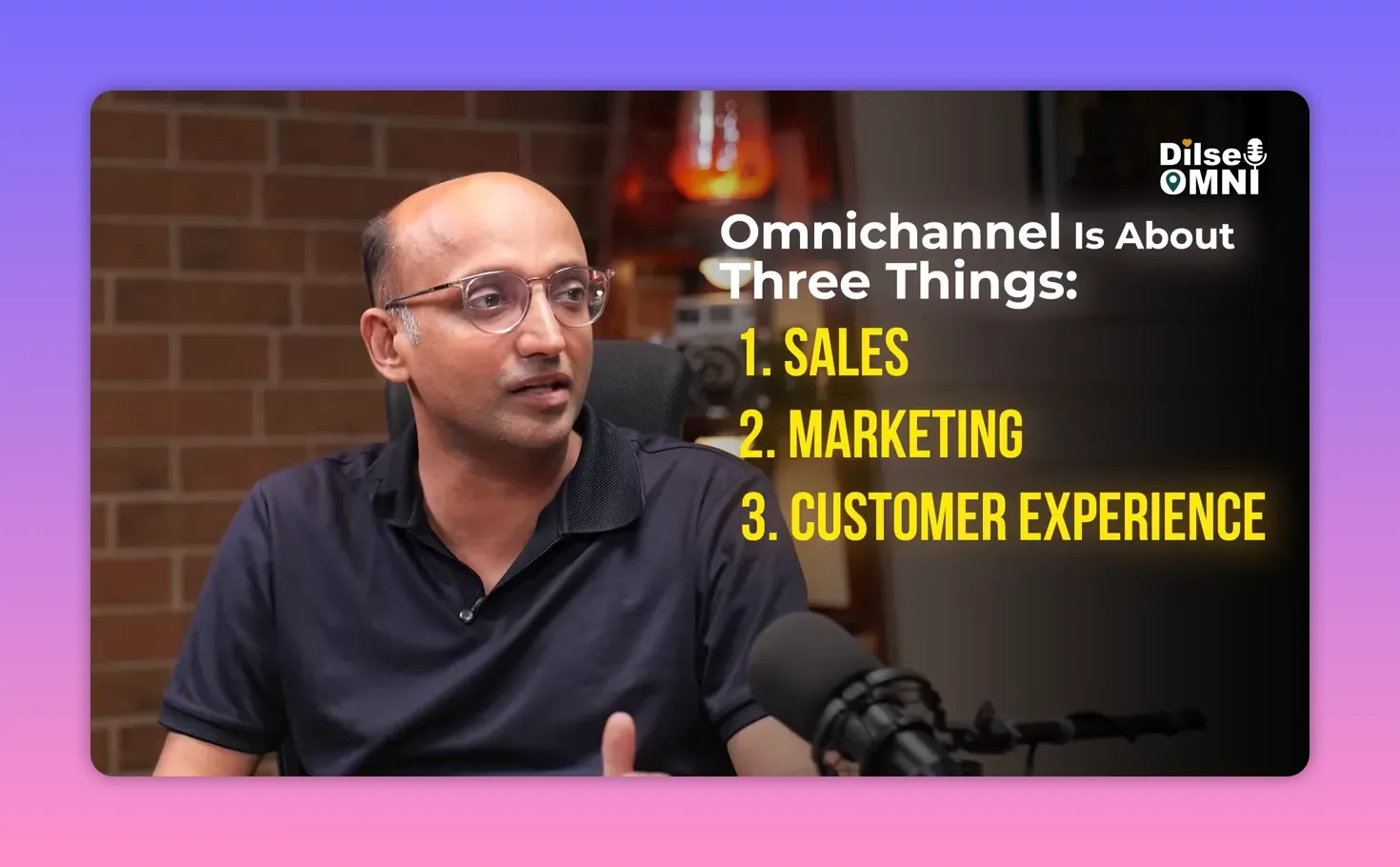
My own view of omnichannel has three parts: sales, marketing, and customer experience. Sales is where the final transaction happens. Marketing is where the customer gets influenced. Experience is what happens when the customer actually engages with the brand.
Sidharth added a very practical definition. Omnichannel means continuing the conversation from where it was left on another channel.
A customer may discover a fashion brand on Instagram, browse on the website, receive a WhatsApp notification, visit a physical store, and eventually buy through an app. In categories such as jewellery, real estate, automobiles, and insurance, online discovery may be huge while the transaction happens in a store, through an agent, or via a sales representative.
The mistake is to become too attached to a channel. The right question is simpler: where is the customer, and how can we help them move to the next meaningful step?
“Do whatever it takes to drive conversion. But when a customer comes to a channel, continue the conversation from where you left it elsewhere.”
That sophistication is what moves the needle. A marketing platform must connect digital and physical touchpoints, not treat them as separate worlds.
The Hidden Cost of Ad Waste
One of the most useful parts of our discussion was ad waste. Performance marketing is easy to scale, but brands often end up paying to reacquire customers they already acquired in the past.
Netcore's analysis across six e-commerce brands suggested that roughly 30% of certain ad spend may be wasteful, especially when dormant customers are pushed back into paid acquisition funnels instead of being reactivated through owned channels.
A customer may have loved the brand, purchased earlier, and then drifted away due to a lack of engagement or simply because the need did not arise. If the brand has first-party data, it can identify this drift, enrich its understanding of the customer, and bring them back through relevant email, SMS, RCS, or WhatsApp journeys.
In an experiment with a fast-growing fashion brand, a three-month dormant-customer revival effort reactivated 30% to 40% of dormant customers. Their average order value was about 1.5 times the brand average. It took effort and investment, but the reacquisition cost was significantly lower than acquiring those customers again through ad platforms.
This is not merely a media efficiency question. It is a retention maturity question. Marketing teams need to understand cohorts, repeat rates, customer drift, and declining engagement before a customer becomes fully dormant.
The Five-Layer Agentic Marketing Framework
Sidharth shared a five-layer framework that helps make agentic marketing more practical. I found it useful because it moves the conversation away from tools and toward architecture.
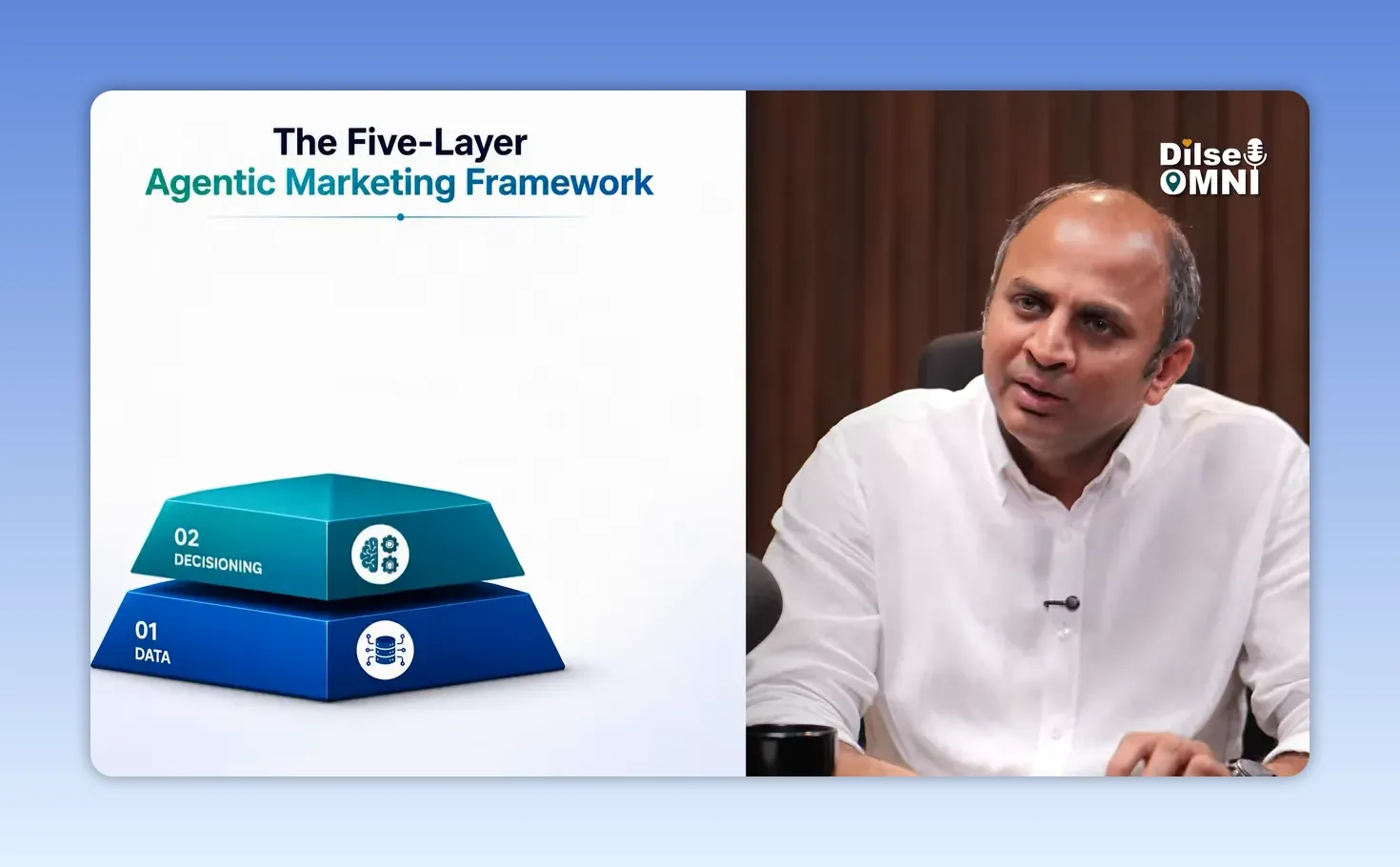
- Data and security: First-party data, consent, privacy, governance, and secure access form the foundation. With DPDP, cookie deprecation, and changing privacy expectations, this is no longer a backend issue.
- Decisioning: Agents can identify cohorts, create micro-segments, recommend journeys, generate campaign briefs, and prioritize next-best actions. A central orchestrating agent brings these actions together around a business objective.
- Activation: The system executes across web, app, email, SMS, WhatsApp, RCS, call centres, branches, stores, dealerships, and every relevant customer touchpoint.
- Feedback loop: Real-time response data flows back into the system so that decisions improve continuously. This creates a closed loop between data, decision, action, and learning.
- Outcomes: The most important layer is the business goal. Revenue, repeat purchase, conversion, profitability, and customer acquisition cost matter more than open rates or clicks alone.
The framework can be visualised simply:
Data and Security → Decisioning → Activation → Feedback Loop → Better Outcomes
At the center is a crucial principle: human in the loop does not mean human in every loop. Domain experts need to define the problem, challenge assumptions, set guardrails, and approve significant decisions. But if every output is manually controlled, the agent becomes just another rule-based tool.
“Agentic marketing is outcome-driven, not activity-driven.”
What Adoption Actually Looks Like
We often talk about AI as though adoption is instant. It is not. Netcore has more than 100 customers live with its insight agents, but around 20 are power users. That is still meaningful, because it shows that value is possible, but it also highlights the work required to make agents effective.
A large gifting portal provides a powerful example. For its Valentine’s Day campaign, the team had a constrained budget but the same revenue target. Traditionally, a four-member team would spend around 10 days studying past performance, developing strategy, choosing segments, and planning creatives.
With the AI engine ingesting historical campaigns and creative performance, the process came down to one or two days. The system identified that only three or four creative approaches had worked exceptionally well. The team narrowed its spending to those high-performing approaches and achieved the revenue goal.
The time saving was valuable, but the larger win was strategic focus. The team did not spread a limited budget across ten experiments just because that was the old process.
There were three reasons it worked:
- Leadership, including the founder, believed in the experiment.
- The internal team collaborated closely to provide business context and challenge early recommendations.
- The team gave the agent enough freedom to run, making corrections rather than controlling every move.
Build, Buy, and Let Agents Collaborate
Should every brand build its own agents? Not necessarily.
If an organisation has a 20 to 50 member technology and analytics team, strong data architecture, and the appetite to innovate continuously, it should absolutely build proprietary agents. Internal teams have richer access to product, inventory, customer, and business context.
But even then, brands do not need to build every domain-specific capability from scratch. A company may build its own next-best-product engine, while a marketing platform handles how that recommendation is activated in the right moment, on the right channel, with the right message.
The stronger model is not build versus buy. It is build, buy, and collaborate.
For companies without these capabilities today, starting with a partner can demonstrate early impact, create confidence internally, and help earn the mandate to build an in-house team over time.
|
Three Mistakes to Avoid in Agentic Marketing
Sidharth’s advice for CMOs and marketing leaders was refreshingly direct.
1. Do not use AI to optimize only input metrics
Click-through rates, open rates, and campaign volume are useful diagnostic metrics, but they are not the final goal. Define an outcome such as revenue at a target cost, repeat purchase, conversions, or a specific product goal. Agents perform better when the destination is clear.
2. Do not treat it as a magic wand
Agentic AI requires ownership. Someone inside the organisation must own the goal, provide context, review progress, and build learning cycles. A platform without committed people becomes another underused platform.
3. Do not underestimate data readiness
Data structures, integrations, consent, tokenization, and secure data access are central to success. The agent needs enough information to learn who converted, why they converted, and what should happen next. Data does not need to be copied everywhere, but it must be accessible in a secure and governed way.
Every Channel Can Become a Conversion Channel
One of my favourite takeaways was Sidharth’s channel-neutral view. Email is not dead. SMS is not inferior. WhatsApp is not automatically the answer. Each channel works differently for different customer segments and moments.
With WhatsApp becoming more expensive, relevance needs to improve. A costly impression has to be more precise and more likely to convert. Meanwhile, email remains a powerful first-party channel, particularly in North America and Europe, where it is still a primary commerce channel.
The future of email is also much more interesting than static newsletters. AMP email can make an email function more like an app. A customer can browse a catalog, provide information, complete a flow, or in some cases even initiate a fixed deposit journey without being redirected elsewhere.
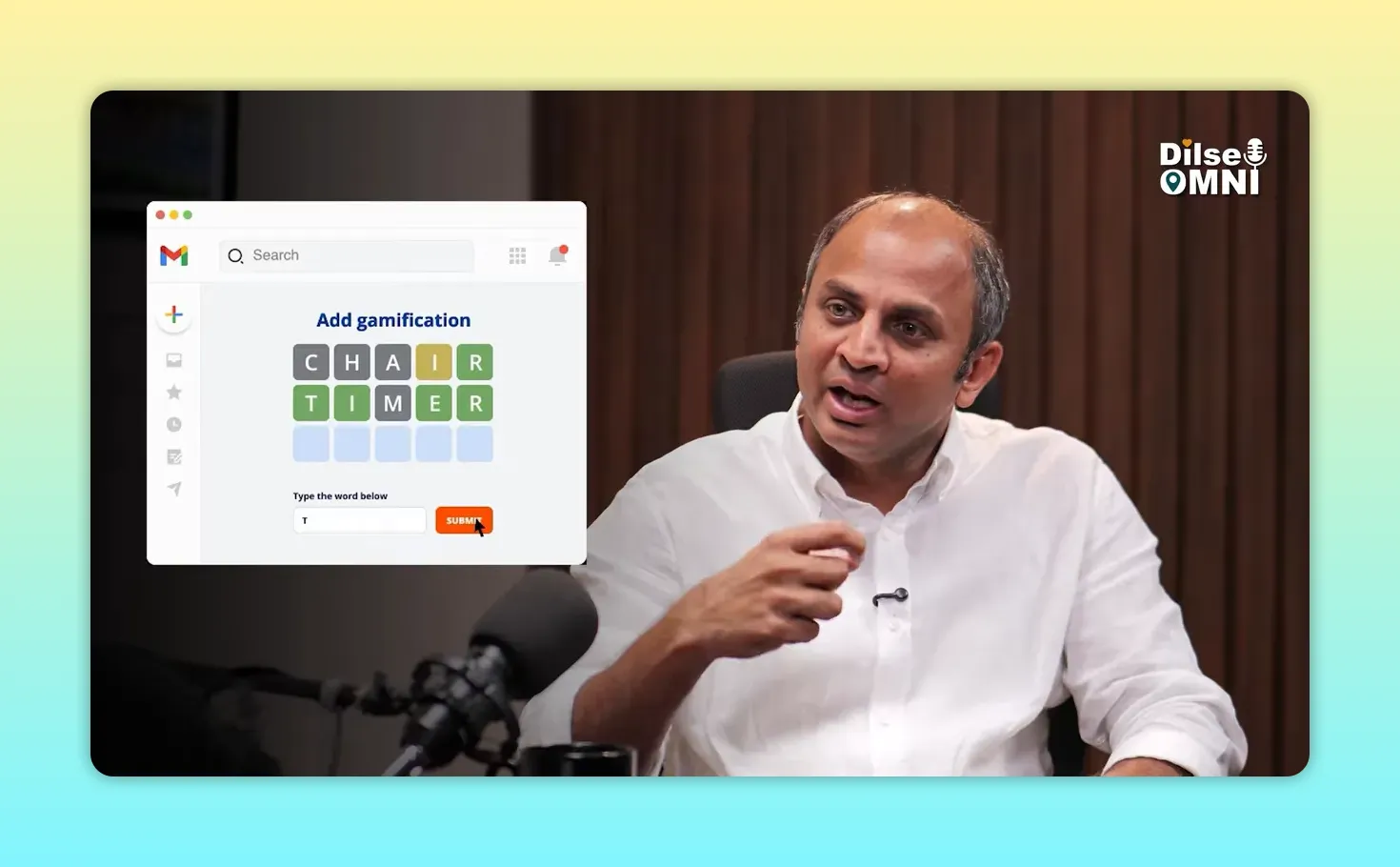
That matters because every additional click creates drop-off. If a customer opens an insurance policy email, an interactive module can collect a vehicle number and recommend an appropriate renewal product. An email stops being just a communication channel and becomes a lead-generation or transaction environment.
Another important metric is the distinction between bot opens and genuine human engagement. Apple Mail privacy behavior can trigger pixels even when an actual person has not opened the email. Better analytics helps brands understand whether engagement really happened, rather than celebrating inflated open rates.
The Marketer of the Future Is a 10x Marketer
We also spoke about careers, because AI is changing what marketing teams need to become. Sidharth spent 16 years in consulting before moving into a technology and product environment. His consulting foundation helped him switch across industries, frame problems sharply, and stay focused on customer outcomes.
For young marketers and tech professionals, his message was simple: go deep. Learn the nuts and bolts. Spend the time required to understand the problem you are solving.
I would add that learning cannot remain passive. It is not enough to consume courses, podcasts, and reels about AI. Take a subscription, experiment with a tool, solve a small problem, make mistakes, and build something. The people who stand out are often those who try before they feel fully ready.
“Understand what is not changing, and quickly adopt what is changing.”
The fundamentals of marketing are not changing: customer understanding, relevance, distribution, trust, and outcomes. What is changing is the speed at which we can analyse, create, test, learn, and act.
Where Agentic Marketing Is Today
Is agentic marketing here already? Sidharth’s answer was balanced. It sits somewhere between the hype of inflated expectations and the beginning of real arrival.
Experiments are at their peak. A few models are already working well. But real impact stories are still limited, adoption takes work, costs are high, and willingness to pay a premium will come only when more businesses can show measurable results.
That is why the right approach is to start now, but start with discipline. Pick a meaningful business problem. Build the data foundation. Create a team that owns the outcome. Run experiments continuously. Learn faster than the market.
Agentic marketing will not solve everything overnight. But it can help marketers move from fragmented actions to coordinated decisions, from channel bias to customer relevance, and from vanity metrics to real business impact.
I am Saurabh Agrawal and we come with a new episode on Dilse omni talks every fortnight and cover different aspect of omnichannel with amazing speakers.
This article was created from the video The Agentic Marketing Playbook with Sidharth Gopalakrishnan | Netcore X Dilse Omni Talks E19