
Omnichannel: Why Every Brand in India Is Moving This Way
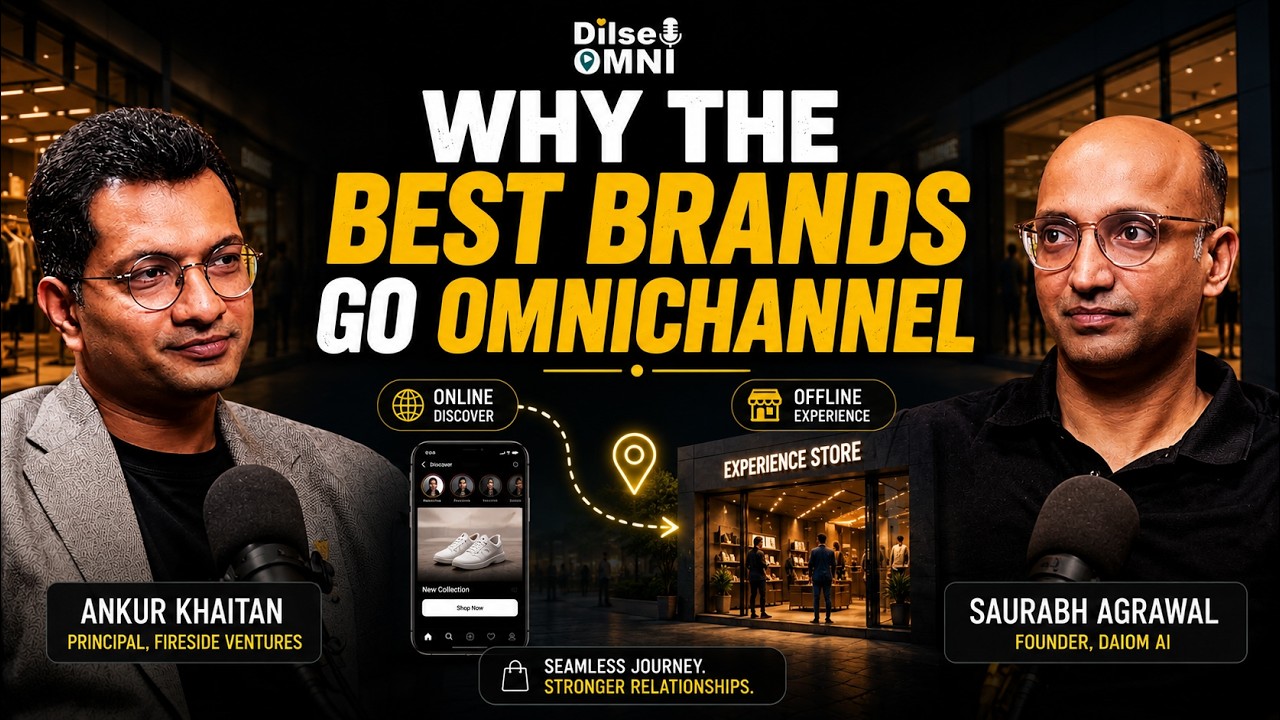
One of the most useful conversations I have had on Dilse Omni Talks was with Ankur Khaitan from Fireside Ventures. What stayed with me was how clearly he explained something many of us sense but do not always articulate well: omnichannel, growth marketing, online offline, ROPO is no longer a side strategy. It is becoming the default operating model for consumer brands in India.
That matters because the Indian retail story is entering a massive new phase. As retail scales from roughly a trillion dollars toward nearly two trillion over the next few years, the real engine of that growth will not be one channel beating another. It will be brands learning how discovery, trust, experience, and conversion work together across digital and physical touchpoints.
Ankur framed it beautifully. For consumer brands, omnichannel is not a separate bucket. It is the journey itself.
"Every consumer brand is either omnichannel already, or on its way there very quickly."
That single idea opens up a masterclass in how brands should think about growth now.
Table of Contents
- Omnichannel is not about presence everywhere
- A simple framework for omnichannel thinking
- Why omnichannel will drive India’s retail growth
- Offline is no longer a late stage move
- What changed in the last five years
- Why malls and high streets are warming up to new age brands
- Brand awareness is the hidden superpower of omnichannel
- The role of retail analytics in store expansion
- The real lesson for founders and marketers
- Where this is heading next
Omnichannel is not about presence everywhere
One of the biggest lessons from the conversation was that omnichannel has matured. Earlier, many teams used the word simply to mean being available on multiple channels. Website, marketplace, Instagram, retail store, done. But that definition is too shallow for the market we are in now.
Ankur’s lens was much sharper. The right way to think about omnichannel, growth marketing, online offline, ROPO is not channel first. It is consumer first.
That means two things.
- Be present where the consumer wants you to be.
- Interact in the shopping environment the consumer prefers.
That sounds simple, but it changes everything. It means Instagram might be a discovery layer, your website might be the education layer, the marketplace might be the convenience layer, and the store might be the trust and experience layer. Same brand. Same promise. Different jobs.
That is where a lot of growth teams still get stuck. They optimise each channel in isolation. But the consumer does not live in isolated dashboards. The consumer moves.
And that movement is exactly where ROPO becomes powerful. Research online, purchase offline. Or sometimes discover offline, buy later online. The path is no longer linear. It is fluid.
"Stop thinking channel first. Start thinking consumer first."
A simple framework for omnichannel thinking
As I reflected on Ankur’s points, I found one framework especially useful. If you are building or scaling a brand, think of omnichannel in four layers.
1. Discovery
This is where attention begins. Social media, creators, performance ads, search, and increasingly peer recommendations play a huge role. For many categories, online is now the first storefront.
2. Consideration
This is where the consumer tries to understand what makes your brand different. New age brands often do not just sell products. They sell a new idea, a new routine, or a new proposition. So content, reviews, demos, and store experiences matter.
3. Conversion
The purchase can happen anywhere. Website, marketplace, WhatsApp, store, or partner retail. The best brands remove friction instead of forcing one route.
4. Retention
Not every channel should acquire. Some channels should deepen trust, drive repeat behaviour, and improve lifetime value. This is where the best omnichannel brands become efficient.
When these layers work together, omnichannel, growth marketing, online offline, ROPO becomes less about chaos and more about orchestration.
Why omnichannel will drive India’s retail growth
The broader market context here is important. India’s retail opportunity is massive, but its structure is changing. Organised retail is growing. New age brands are scaling faster. Consumers are comfortable discovering online and transacting offline, or the other way around.
Ankur’s view was clear: a large part of this expansion will be powered by omnichannel brands.
Why?
- Consumers are already living in an online offline world.
- Discovery has shifted heavily to digital.
- Trial, trust, and tactile experience still matter in many categories.
- Founders now have working playbooks to bridge both worlds.
That last point is crucial. A few years ago, many founders treated offline as a later stage move. First build online. Then prove traction. Then maybe open stores.
Today, that thinking is changing fast.
Offline is no longer a late stage move
This was another strong insight from Ankur. Offline is increasingly part of product market fit itself.
That is a big shift.
In several categories, a brand cannot fully understand demand without learning how the product performs in a physical environment. Some products need touch and feel. Some need assisted selling. Some need trust. Some need instant gratification. And some simply become more memorable when experienced in person.
So the new playbook is not always online first and offline later. It is often online for rapid discovery and validation, followed by offline much earlier than before, with more precision than before.
"Offline is now as much a part of PMF as online in many categories."
This is where omnichannel, growth marketing, online offline, ROPO becomes practical rather than theoretical. You can drive digital attention into physical footfall. You can learn what catchment converts. You can shape inventory, assortment, and staffing with sharper insight.
And because ecosystems have matured, founders have more support to do this well.
What changed in the last five years
I asked Ankur what really changed in the omnichannel playbook over the last four to five years. His answer had two sides: demand and supply.
On the demand side
Consumers are very comfortable discovering new brands online. That comfort has gone mainstream. They may spot a brand on social media, shortlist it through reviews, compare alternatives, and then walk into a store to experience it before buying.
This is the core of ROPO. The line between online and offline has blurred, not because stores are less relevant, but because the journey starts earlier and elsewhere.
On the supply side
Founders have become far more experimental. They are willing to test offline playbooks earlier. They have seen examples across categories. And landlords, mall operators, and ecosystem partners are more open than they were before.
That is not a small point. Infrastructure around omnichannel has improved. There is more willingness to structure flexible leases, try new formats, and back emerging brands that can generate traffic and sales.
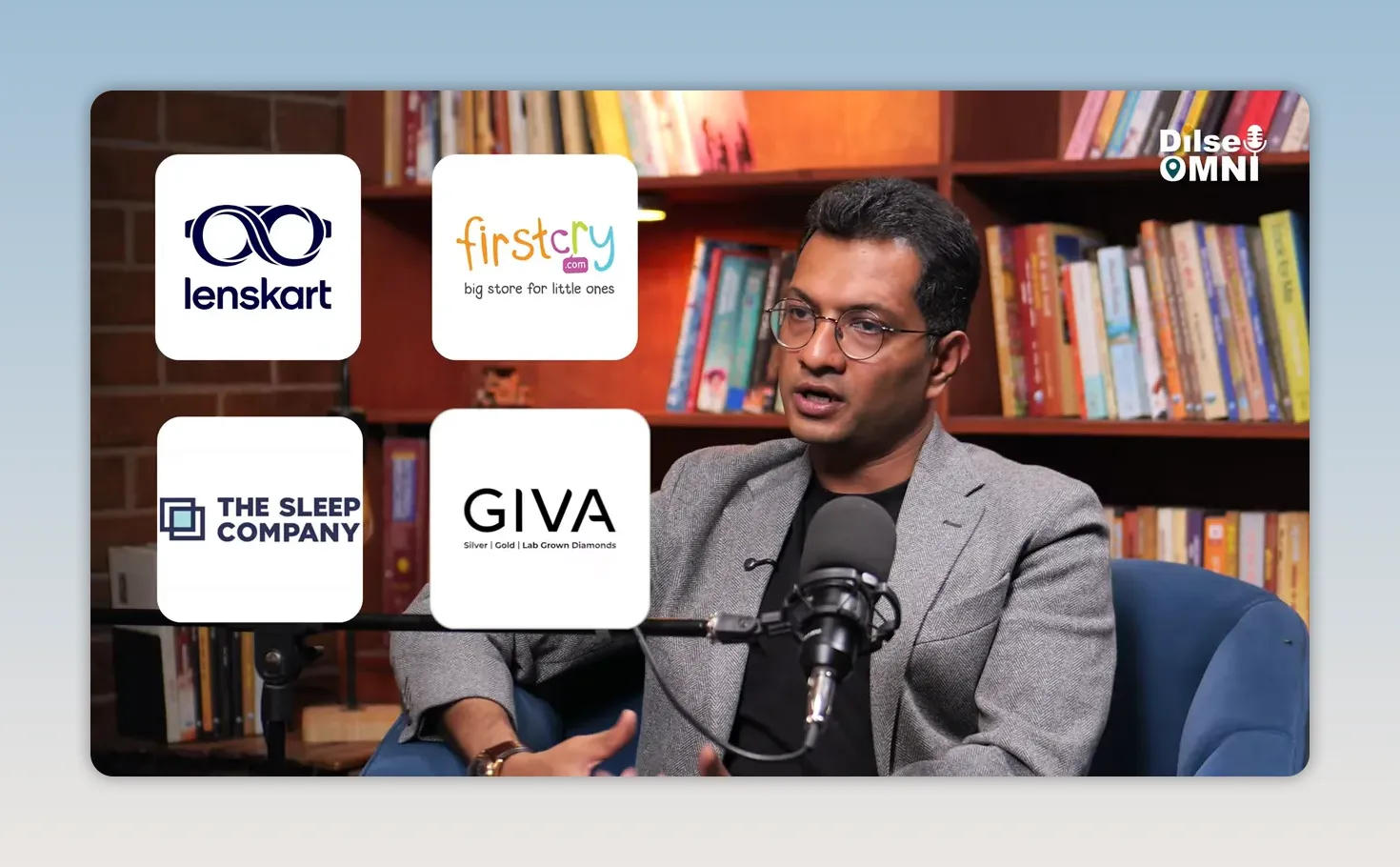
Once a few brands prove a model, an entire market starts moving faster.
Why malls and high streets are warming up to new age brands
One of Ankur’s most interesting observations was about how retail real estate is changing. For a long time, malls relied heavily on multiplexes and food courts to drive traffic. That dynamic is evolving.
Today, new age brands themselves are becoming anchors.
That may sound dramatic, but if you look around, it is increasingly visible. Consumers are excited by novelty. They want fresh concepts, newer brands, and experiences that feel current. In many malls and shopping districts, digitally native brands are now driving intent-led visits.
Not just browsing. Real shopping.
Ankur made an important distinction here. The real proof is not footfall alone. It is whether people walk out carrying shopping bags. That is the true test of whether a store is adding value.
This is also where brand awareness compounds. When a digital brand opens a store in the right catchment, it does more than convert traffic. It becomes visible in the physical world. It earns legitimacy. It creates memory structures. It starts behaving like a cultural object, not just a URL.
Brand awareness is the hidden superpower of omnichannel
This is something I always find under-discussed in growth conversations. We spend a lot of time debating CAC, attribution, or conversion rates. But some of the biggest wins in omnichannel, growth marketing, online offline, ROPO come from brand awareness.
When a brand is discovered online and then seen in a mall, on a high street, inside a shopping district, or in conversations with friends, awareness deepens. The brand starts to feel bigger than an ad.
That is why campaigns and content around omnichannel are not just performance plays. They can become serious brand-building engines.
Even for a platform like Naukri, the lesson is relevant. Naukri grew not just through direct response utility, but through repeated salience. When a brand becomes top of mind across contexts, awareness feeds trust, and trust feeds action. Omnichannel thinking does the same for consumer brands. It gives them more surfaces to stay mentally available.
That is also one reason these conversations on Dilse Omni matter to me. They are not just about channels. They are about how modern brands become memorable.
|
The role of retail analytics in store expansion
Another point that stood out was the role of analytics in making offline smarter. Store expansion used to be a far noisier decision. Today, brands can use location intelligence, catchment analysis, and retail analytics to dramatically improve the odds of success.
This is where the conversation moved from instinct to system.
If you know the catchment, the product fit, the demographic profile, the likely footfall quality, and the surrounding brand mix, opening a store stops being a blind leap. It becomes a calibrated bet.
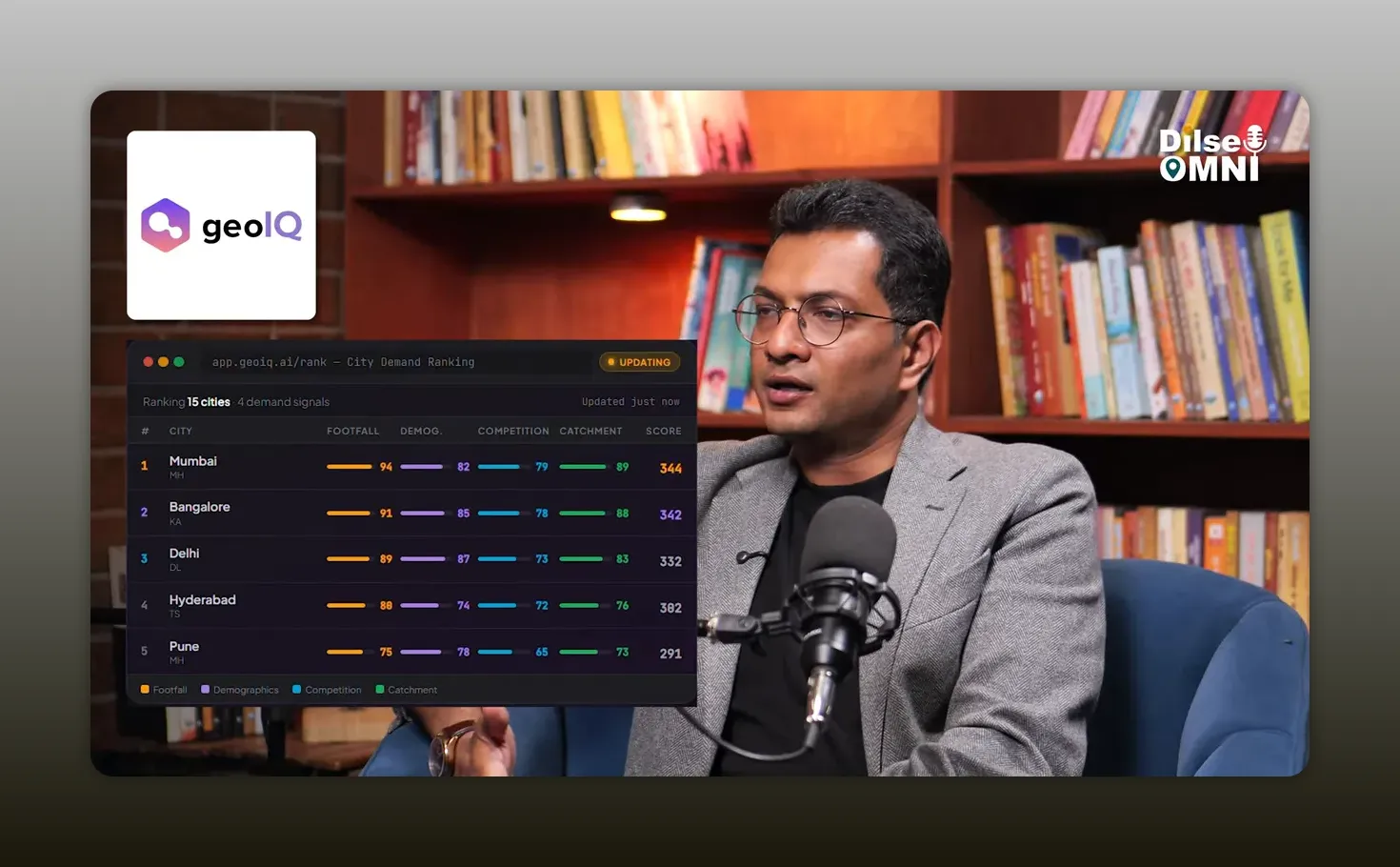
That is one reason Ankur expects portfolio brands to open a very large number of exclusive brand outlets in the coming years. Once the playbook and the data both improve, scale follows much faster.
"The method to the madness is getting clearer."
The real lesson for founders and marketers
If I had to compress the whole conversation into a few practical lessons, they would be these:
- Do not define omnichannel by channel count. Define it by consumer relevance.
- Map the job of each channel. Discovery, trust, trial, conversion, or retention.
- Treat ROPO as normal behaviour, not an exception. Measurement must catch up to reality.
- Go offline earlier when the category demands it. Especially where experience changes conversion.
- Use retail analytics before expansion. Better inputs create better store outcomes.
- Remember that omnichannel builds brand awareness too. Not just sales efficiency.
That last one is worth repeating. The best omnichannel brands are not merely available in more places. They are understood in more places. That is a very different advantage.
Where this is heading next
If Ankur is right, and I think he is, we are only at the beginning of this shift. New age brands are moving from edge cases to centre stage. Mall operators are adapting. High streets are evolving. Consumers are already ahead of the industry in how naturally they move between online and offline.
So the winners in omnichannel, growth marketing, online offline, ROPO will be the brands that stop asking which channel matters most, and start asking what the consumer needs at each moment.
That is a much better question. And it creates much better businesses.
I am Saurabh Agrawal and we come with a new episode on Dilse Omni Talks every fortnight and cover different aspect of omnichannel with amazing speakers.
This article was created from the learnings from the video Why Every Brand in India is Going Omnichannel.