How to Choose the Perfect Digital or Physical Product for Your Audience (and Launch It Correctly)

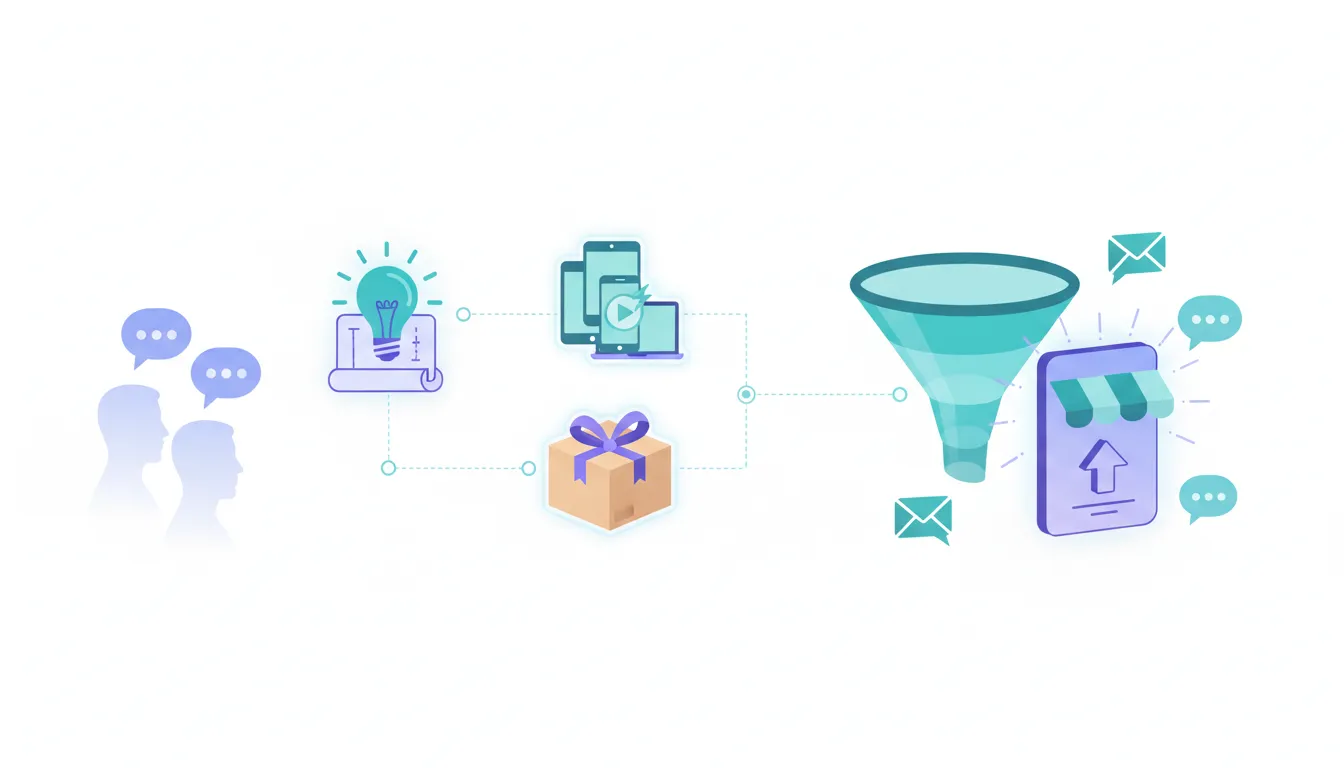
Creating a product is easy to talk about and harder to execute. The real challenge is finding something your audience actually wants, packaging it in a way that feels like real value, and launching it so the offer does not get lost.
This guide walks you through a practical, repeatable process to:
- Find a winning product idea based on what your audience already watches and asks for
- Decide digital vs. physical based on cost, risk, and audience preference
- Add value so your product feels irresistible at your price
- Launch using owned channels like email or texting and a sales page
- Use live and social strategically to convert interest into sales
What “finding the perfect product” really means
The “perfect product” is not the one you are most excited about. It is the one that matches three things at once:
- Audience demand: people already search, comment, and return for the topic
- Clear transformation: buyers understand exactly what they will get and the result it helps them achieve
- Fit for your ecosystem: you can create, deliver, and market it using your content and channels
If any of these is missing, launches tend to underperform because the offer does not feel relevant or worth the price.
Step 1: Build your product from your best-performing content
A fast way to reduce guesswork is to reverse-engineer what already works. Look at your top performing topics and ask:
- Which videos or posts bring the most views, comments, and shares?
- What problems do people keep coming back to solve?
- What questions show up repeatedly in comments?
A simple rule
Make the product around your most viewed and most discussed topics. Your content already “proves” demand. The job now is to package that demand into an offer.
Step 2: Choose digital or physical based on your audience and your risk tolerance
Digital and physical products can both sell well. The better question is: which type fits your audience’s preferences and your production reality?
Digital products: best when you want speed, low cost, and repeat sales
- Low production risk: if it flops, you usually lose less money than with inventory
- Easy to scale: the same asset can sell again and again
- Fast iteration: update PDFs, templates, or bundles based on feedback
Physical products: best when your audience wants “something in hand”
- Stronger emotional pull: some audiences prefer tangible items they can use or display
- Higher costs: materials, shipping, storage, and fulfillment
- More complexity: sizing, variations, and returns can eat time and money
Quick decision checklist
- Do people already ask for tools, guides, checklists, templates, or step-by-step instructions? If yes, digital often fits.
- Do people respond positively to the idea of holding or using a tangible item? If yes, physical may fit.
- Can you afford inventory risk right now? If not, start digital or use small-batch testing.
- Is your audience price sensitive? Digital is usually easier to price accessibly.
Step 3: Find out what they want using “audience pulling”
Instead of guessing, test product preferences with your audience. The goal is to collect data from real interest signals, not just vibes.
Ways to pull product demand from your audience
- Polls: offer 2 to 5 options and let people vote
- Community posts and comments: ask what they would actually buy
- “If I created this, would you want it?” prompts: include concrete examples
- Email questions: ask subscribers to choose between specific product concepts
How to run the test
- Pick your top 3 candidate products (based on your top content topics).
- Run a poll and collect results.
- Re-poll with refinements if needed (for example, format, size, or number of resources inside).
- Use the top choice as the foundation for your full offer.
Important: demand often surprises creators. People may choose the option that best solves a pain point, not the one you assume is “most valuable.”
Step 4: Validate with competitors and product reviews
Validation prevents you from rebuilding something that already exists in a way that underwhelms customers.
Analyze competitors without copying them
- Look at what similar creators sell and how they position it
- Identify gaps: missing resources, unclear outcomes, poor packaging, or complicated delivery
- Stay away from offers that have weak sales signals or consistently negative feedback
Read reviews like a buyer
For digital products especially, reviews are gold. Make a list of common complaints and wishes. Your product should address those directly.
- What do buyers say they wanted more of?
- What did they struggle to use or understand?
- Where does the product fall short compared to the title promise?
Step 5: Analyze your audience’s budget and price expectations
The best product idea can still fail if pricing mismatches what your audience considers reasonable.
To estimate price fit, review your audience’s existing buying patterns and language cues:
- Do people often mention “budget,” “cheap,” or “easy affordable” in comments?
- What price points do your audience regularly purchase elsewhere?
- Are your top commenters repeat buyers, or casual viewers?
Then choose a price range that feels aligned with the value they receive and the type of transformation they want.
Step 6: Increase perceived value using value stacking
Perceived value is not just quality. It is how clearly you show that your offer includes everything needed to succeed.
What “value stacking” means
Bundle your core product with supportive assets that reduce friction and help buyers get results faster.
Value stacking ideas for digital products
- Checklists and cheat sheets
- Templates, swipe files, and examples
- Shopping or resource lists
- Beginner guides and step-by-step walkthroughs
- Bonus “early wins” mini modules
- Worksheets and planning tools
Value stacking ideas for physical products
- Instruction booklet or quick-start guide
- Printable add-ons (seasonal variations, upgrades, or recipes)
- Exclusive companion digital resources
- Bundles that save time and reduce decision fatigue
How to price your stacked offer
Test your price by asking: does your bundle make the “why pay” obvious in under 10 seconds? If not, add clarity or add components that directly improve outcomes.
Launching correctly: the conversion system that works for most creators
A launch is not a single post or a one-time announcement. It is a process that moves people from interest to action using channels you control.
1) Use email or texting as your primary driver
Paid ads can help, but conversions typically come faster when you can message people directly.
- Create an email list or SMS list
- Use it actively, not just for launches
- Plan your launch sequence ahead so you do not scramble at the last minute
2) Create a small lead magnet that is connected to your main offer
Do not use generic freebies. Use a small product that points directly to the bigger transformation.
Example structure:
- Free or low-cost mini resource (related to one topic within your bigger product)
- Main product purchase for the full system or complete solution
3) Use a landing page to sell while you focus on content
Instead of explaining everything repeatedly, send traffic to a sales page that clearly communicates:
- Who it is for
- The problem it solves
- What is included (in plain language)
- Why it is worth the price
- How to buy
This reduces constant “selling mode” and lets your emails and social posts do the directing.
Live launches: how to keep momentum and convert
Live content can work extremely well for launches because it creates energy, proof, and urgency. The key is structure.
A practical live format that supports selling
- Start by making people feel special (address names, reference what they care about, keep it personal)
- Use giveaways strategically to increase engagement and retention
- Include entertainment or value segments aligned with your audience
- Sell your offer repeatedly using the same clear framing: total value, price, and what is included
- Repeat in cycles so the live stays dynamic and conversion-ready
How often should you sell during a live?
A helpful pattern is to reset your approach every 20 minutes or so: bring people back to the offer, remind them what they get, then move into another engagement segment.
Social strategy: plan before launch day and push after
Many launches underperform because they only push right before and during the launch. A stronger approach is front-loading preparation and then continuing after the big day.
A simple timeline
- About 2 weeks before: set expectations. Tease the problem the product solves and the audience fit.
- In the final 7 to 3 days: increase frequency and show details: what is included, who it is for, and why it is priced fairly.
- Launch day: use a stronger call to action with urgency.
- After launch: keep pushing consistently. Many sales still come in the days following because people need reminders and time to decide.
Use your main platforms (and your email or SMS) in a coordinated sequence. Keep messages consistent across channels.
Common mistakes that kill product launches
1) Building a product around features instead of outcomes
Buyers care about what changes for them. Features alone do not persuade.
2) Choosing a product you can make, not one your audience will buy
If comments do not ask for it and polls do not validate it, you are likely guessing.
3) Under-packaging value
Even a good product can feel too thin at the price point. Bundle support materials and make the offer feel complete.
4) No sales page or unclear offer stacking
If people cannot quickly understand what they get, conversions drop.
5) Forgetting price fit
Adjust pricing based on your audience’s budget reality, not on ideal profit goals.
6) Only promoting during launch day
Sales often ramp again after the initial push. Plan for the full window.
FAQ: product selection and launch
Should I let my audience choose the product features (color, size, options)?
It can work, but be careful. More options can create complexity and dissatisfaction if the final choice does not match every preference. If you involve the audience, limit options so everyone can feel good about the outcome.
What if my first product idea flops?
Use it as feedback. With digital, the risk is lower, and you can improve the offer, bundle, or positioning for the next launch. Reviews and buyer questions are the fastest way to find the fix.
How do I know my niche is large enough for a product?
Look at engagement signals, not just views: comments, repeat questions, and consistent interest in specific subtopics. If your content attracts the same people over time, you likely have product demand.
Quick checklist: from idea to launch-ready offer
- Choose a topic: based on your top videos and repeat comments
- Pull demand: run polls or ask for purchase preferences
- Validate: check competitor offerings and read reviews
- Decide format: digital vs physical based on audience preference and risk
- Stack value: bundle templates, checklists, examples, or companion resources
- Price for fit: align with your audience’s budget expectations
- Build conversion assets: email or texting list and a sales page
- Launch with structure: live cycles, giveaways, and repeated clear calls to action
- Promote beyond launch day: continue pushing after the big day
Final takeaway
The perfect product is the one your audience is already asking for, delivered in a format they prefer, packaged with enough value to justify the price. Then launch it with a conversion system: owned channels, a clear sales page, a structured promotion plan, and consistent post-launch follow-through.
If you want better results, do not start by creating. Start by detecting demand, then stacking value, and finally running a launch that moves people from interest to purchase.


