How to Get Your First Brand Deal as a Creator: Pitching, Pricing, and Contract Basics

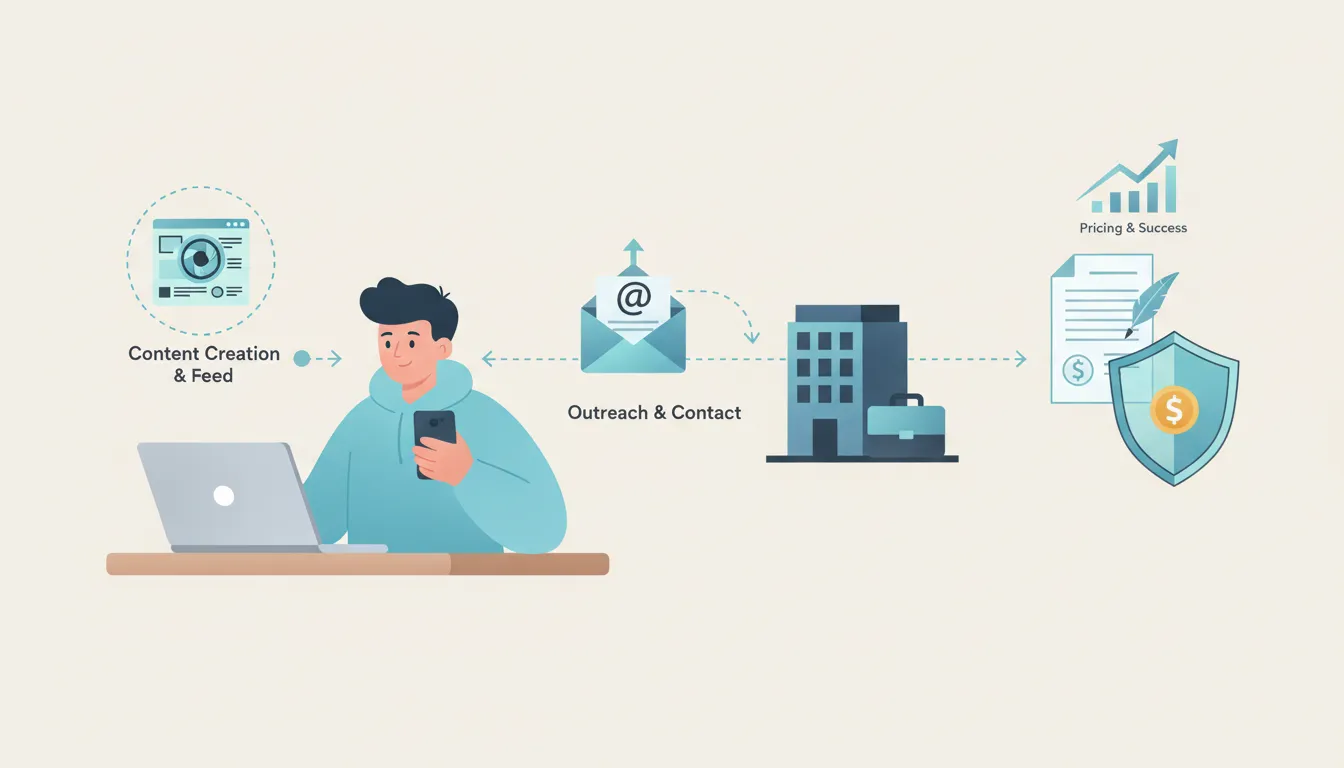
Landing your first sponsored partnership does not have to be mysterious. If you are a creator, you need three things working together: content that signals “I am sponsor-ready,” an outreach process that reaches the right decision makers, and agreements that protect your time, content rights, and future revenue.
This guide walks you through practical steps you can use right away, plus the contract clauses that most creators overlook until it is too late.
What a brand deal really is (and what brands are buying)
A brand partnership is not just a mention. Brands are buying:
- Audience reach that matches their target customers.
- Content alignment so the promotion feels native to your style.
- Creative execution with low risk and clear deliverables.
- Legal clarity on usage rights, exclusivity, and timing.
When you build your pitch and your contracts around these four areas, negotiations get faster and you get paid more consistently.
Step 1: Create “sponsor-ready” content before you have a sponsor
You can look professional to brands even if you have not signed a deal yet. The goal is to show that you can produce structured promotional content on demand.
Build a repeatable sponsor-style format
Instead of one-off posts, create a recognizable content format you can repeat. For example:
- A consistent hook and intro
- A clear segment where a product is introduced
- A stable editing style and call-to-action
- On-screen context that helps the audience understand the value
Use brand tags and notifications (carefully)
When possible, tag relevant companies so they can discover your content. The point is to demonstrate that you understand brand integration and you already post content they would want to be associated with.
Tip: keep the content helpful and not misleading. Avoid implying a paid relationship if it is not sponsored.
Optimize your production workflow
Brands want reliability. A simple way to signal this is by improving production quality and speed:
- Better lighting and audio
- Faster editing process
- A system for scripts, notes, and revisions
- Template delivery files for quick turnarounds
Step 2: Know who to pitch and how to target them
Many creators pitch randomly. Instead, build a target list of brands that are already spending on creators and that match your niche audience.
Audit sponsor activity in your niche
Start with a simple research loop:
- Find creators with content similar to yours
- Identify the brands they partner with
- List those brands and their campaign types
- Check whether those brands run creator programs repeatedly
This reduces the odds of pitching brands that never do partnerships like yours.
Find the right contact
Common roles that handle creator partnerships include:
- Influencer marketing managers
- Creator partnerships leads
- Social media marketing leads
- Brand marketing managers
- Agencies managing brand programs
If you cannot reach the exact person, look for the closest functional owner. Outreach is about access, not perfection.
Do not send generic “I want a brand deal” messages
Your pitch should quickly answer:
- Who you are and what audience you reach
- Which specific brand campaign fits your content style
- What deliverable you propose
- Why you are a good match
Step 3: Write a pitch that gets responses
Your outreach does not need to be long. It needs to be specific and easy to act on.
A simple pitch structure that works
- One-line credibility (your niche and the kind of content you make)
- Why this brand (reference a relevant product, campaign, or audience alignment)
- Proposed deliverable (what you would create and where it would run)
- Proof (metrics and one or two examples of similar content)
- Low-friction call to action (ask for budget ranges or a quick call)
Email templates: include a clear “next step”
Instead of asking “Are you open to brand deals?” ask for a decision:
- “What is your typical budget for creator integrations in this category?”
- “Who owns influencer partnerships for this campaign?”
- “Would you prefer a short or a longer format for this goal?”
Follow up systematically
Rejection is common. Many creators see replies after multiple touches. Use a simple follow-up schedule:
- First email: proposal and proof
- Follow-up 1: send portfolio link or 1 relevant example
- Follow-up 2: ask a budget or timeline question
- Follow-up 3: offer an alternative deliverable (shorter format, different angle)
This keeps you in the conversation without spamming.
Step 4: Create a brand deck (not just a media kit)
Brands want decision-ready information. A media kit is often too passive. A brand deck should help them buy from you.
What to include in a brand deck
- Audience summary (who you reach and what they care about)
- Content categories (the types of integrations you can deliver)
- Example work (screenshots, links, or performance highlights)
- Packages aligned to different budgets (short, mid, long)
- Where the integration appears (placement in the video or post structure)
- Analytics (use the most relevant time window, like last 30 or last 60 days)
- Team or production pipeline if you are not a solo operator
- Contact and next steps
Give brands options (“a buffet, not a meal”)
Many deals die because pricing feels binary: you are too expensive or they are too low. If you offer bundles at multiple price points, you can match more budgets and close faster.
Step 5: Price your integrations using packages and negotiation tactics
Pricing is where creators often get stuck. The best approach is not one single number. It is a range you can adapt to what the brand can afford.
Use packages tied to deliverables
Examples of package tiers:
- Short integration (faster turnaround, fewer production hours)
- Long integration (more scripting, editing, and creative work)
- Multi-channel (for example: short + newsletter mention)
- Extended bundle (multiple posts, repurposing, or longer campaign window)
Let the brand share budget first when possible
When you ask for budget ranges, you can propose the best-fit tier instead of walking away immediately.
It also improves negotiation fairness. If they cannot stretch, you can offer a lower-cost option rather than ending the conversation.
Step 6: Handle revisions and approvals without losing money
One of the fastest ways to lose profitability in creator partnerships is unlimited revisions. It can turn a sponsored project into a never-ending production loop.
Set revision rules clearly in writing
- Define how many revision rounds are included.
- Separate revisions for scripts versus B-roll, graphics, and edits.
- Explain what happens if the brand requests changes outside the included rounds (additional fees or rescheduling).
Require approvals to happen before production begins
A common workflow that protects you:
- Brand approves the written plan or script
- Filming begins
- Revisions after filming are limited to defined areas (unless you renegotiate)
This reduces the chance of a brand asking for major changes after you have already invested in shooting.
Step 7: Understand contract clauses that can cost you later
Contracts can be overwhelming. Focus on the clauses that most often create long-term risk for creators.
1) Usage rights and “term” (how long they can use your content)
Usage rights define where and for how long the brand can use your name, likeness, and footage.
Watch for:
- Perpetuity language (infinite time)
- Worldwide usage with no campaign limit
- Rights that extend beyond what they pay for
Better approach: limit usage to the campaign period and the channels the brand actually needs.
2) Exclusivity (what you cannot do for competitors)
Exclusivity is common in brand deals, but creators can accidentally block their future income.
Watch for:
- Exclusivity that lasts too long
- Categories so broad you cannot work in your niche
- Exclusivity that is “in perpetuity”
Better approach: narrow the category and limit the duration. If the category is too wide for your career, ask for a smaller scope.
3) Monetization restrictions
Some contracts try to restrict your ability to run your own monetization tools or to compete within the same content.
Clarify the intent: brands often want to avoid competitor ads or conflicting messages. You may be able to solve the real concern without giving up unrelated monetization rights.
4) Payment terms and late payment risk
Payment clauses define the payment schedule and remedies if payment is late.
Protect yourself by:
- Confirming net terms (for example, Net 30 or Net 60)
- Including a clear invoicing and approval process
- Having a plan if payment is delayed (formal notice and escalation)
5) Deliverables and ownership of materials
Make sure your agreement clearly states:
- What you are delivering (exact number of assets)
- Deadlines and due dates
- Where each deliverable will be used
- What you keep ownership of (for example, your underlying creative work)
Tip: it is acceptable to negotiate these even if the brand has a standard template.
Step 8: Hire managers, editors, and agents without giving away the farm
As you grow, you may hire help. Contracts with managers and agents also need the same level of scrutiny because they can include equity, profit shares, or control over your future.
Vet candidates with trial periods
- Run a paid trial instead of signing a long contract immediately
- Verify they can deliver under your schedule and standards
- Confirm they have niche experience (not just general talent)
Watch for “too much for too little” terms
If a contract demands large percentages or equity, the manager should provide substantial time, leadership, or measurable results.
Common mistakes that block first brand deals
- Waiting for a sponsor before building sponsor-ready content (you can build credibility early)
- Pitching broad brands instead of targeting partners already doing creator campaigns
- Using a media kit that does not sell (brands need packages, examples, and deliverables)
- Pricing too rigidly (give options so you can meet different budgets)
- No revision boundaries (unlimited changes kill margins)
- Signing usage rights “forever” without limiting term or campaign scope
- Accepting exclusivity that is too broad for your niche
Quick checklist: ready to pitch in 48 hours
- Pick 1 niche theme for your first partnerships
- Create 2 to 4 sponsor-style examples (short and structured)
- Update your brand deck with packages and deliverables
- Build a targeted brand list based on sponsor activity in your niche
- Write a specific pitch email with a clear next step
- Prepare a revision policy you will enforce in contracts
- Review core clauses for usage rights, exclusivity, payment, and monetization
Frequently asked questions
How many followers do I need to get my first brand deal?
There is no fixed number. Brands care more about audience fit, content quality, and consistency. Micro and mid-size creators can land first deals if their niche audience is valuable and the deliverables are clear.
Should I list prices in my media kit or brand deck?
Many creators benefit from pricing tiers instead of a single price. Packages help you match different budgets and keep negotiation simple.
What if a brand requests “unlimited revisions”?
Negotiate revision rounds. If they need major changes after script approval or production starts, that should come with additional fees or a revised scope.
What contract clause is most important for creators to understand?
Usage rights and term are usually the most critical. If a brand can use your likeness and content indefinitely, it can affect your long-term control and future opportunities. Exclusivity is the next big risk area.
Key takeaways
- Create sponsor-ready formats before you get paid.
- Target brands that already partner with creators in your niche.
- Pitch with a specific deliverable and an easy next step.
- Use a brand deck that sells packages, not just metrics.
- Set revision limits and define approvals to protect margins.
- Review usage rights, exclusivity, and monetization restrictions before signing.


