How to Build a Sustainable Creator Business: A Practical Framework for Growth Without Burnout

Mar 26, 2026 • 7 min read
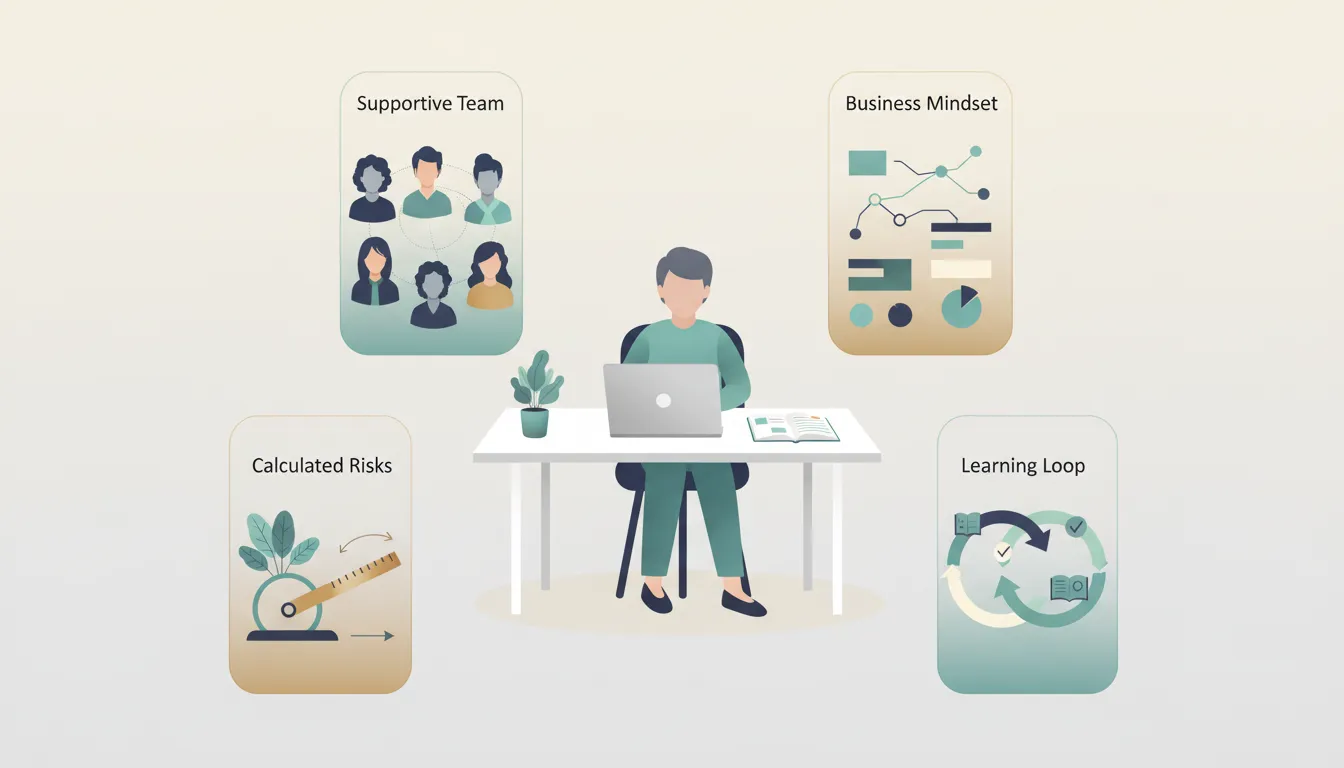
Building a sustainable creator business is less about “going viral” and more about designing a system that can handle time, money, people, and momentum. Whether you are starting from scratch or scaling a long-running channel, the goal is the same: create content consistently while protecting your energy and your business stability.
This guide gives you a practical framework built around four pillars: build an A-team, adopt a business mindset, take calculated risks, and treat mistakes as learning. You will also get concrete checklists, hiring order ideas, planning templates, and common pitfalls to avoid.
What “sustainable” really means for creators
Sustainability is not just about uploading regularly. It is about whether your operation can keep producing quality content and revenue without collapsing under workload, cash flow issues, or constant decision fatigue.
Signs your creator business is sustainable
- You have a predictable workflow (even if output varies week to week).
- You can absorb setbacks like a failed project, ad changes, or platform changes.
- Your team is not held together by heroics and one person’s availability.
- Revenue sources are resilient and not dependent on a single metric.
- Planning reduces stress by clarifying what matters now.
Signs you are heading toward burnout
- You are doing every stage of production yourself.
- You keep changing your strategy midstream with no goal alignment.
- Your cash flow depends on one sponsor or one monetization method.
- You avoid hiring because you fear losing creative control, not because the workflow is working.
- Every project feels like a brand new invention.
The A-B-C-D framework for sustainable creator growth
Think of sustainable growth as a system. The A-B-C-D framework helps you build that system in a way that supports both output and longevity.
A: Build an A-team that increases staying power
Great creators often focus on talent. Sustainable creators also focus on team resilience. A strong team helps you maintain output even as your interest, energy, or motivation naturally changes over time.
What an “A-team” actually does
- Protects your time by taking high-effort tasks off your plate.
- Improves quality through feedback and specialized skills.
- Creates creative continuity by keeping the pipeline moving.
- Introduces fresh ideas so your content does not stagnate.
How to hire without losing your channel identity
Many creators worry that hiring will dilute their voice. That can happen if you hire randomly or expect others to match your taste perfectly. A better approach is to hire for roles and decision rights:
- Define your non-negotiables (style, pacing, content standards, audience promise).
- Delegate execution for tasks where expertise matters (editing, design, research workflows).
- Keep a clear feedback loop so disagreements become structured improvements, not personal friction.
Hiring order: start where leverage is highest
You can structure hiring differently depending on your niche, but most creators benefit from removing bottlenecks first.
Common leverage-based starting points:
- Editor first (if you struggle with throughput): hire editing to increase the number of deliverable drafts.
- Thumbnails and packaging next (if discoverability is the bottleneck): improve click-through and clarity.
- Producer or project manager next (if pre-production is chaotic): systematize research, scripting, timelines, and QA.
- Research and scripting support next (if ideation takes over your life): create a repeatable topic pipeline.
If you are doing pre-production yourself and everything depends on you, prioritize support that reduces ideation workload and decision fatigue, not only post-production.
B: Adopt a business mindset without killing creativity
“Business mindset” does not mean turning content into cold marketing. It means running your creation like a real operation: tracking goals, understanding tradeoffs, and making decisions based on outcomes.
Goals are what connect creativity to survival
Without goals, it is easy to confuse activity with progress. With goals, you can evaluate what to keep, stop, and invest in.
Set practical creator goals in two layers
- Survival goals: cover costs, fund team, and maintain stability.
- Growth goals: increase audience reach, revenue diversification, and production capacity.
Example survival goals:
- Cash reserve target for 3 to 6 months of operating costs.
- Monthly revenue floor from at least two sources (ads plus memberships, for example).
- Capacity goal: number of publish-ready assets per month.
Example growth goals:
- Improve average view velocity by optimizing titles, thumbnails, and packaging.
- Increase member conversion rate with clearer offers and consistent community value.
- Launch a secondary content format (shorts, podcasts, newsletters) to support the main channel.
Use numbers to guide creative tradeoffs
When content types “feel” good but do not support business goals, you need a decision rule. Consider tracking:
- Time cost: hours spent per deliverable.
- Outcome: views, watch time, CTR, or qualified engagement.
- Revenue contribution: sponsor performance, memberships, or product sales impact.
Then ask: Is this helping us meet the goal we care about?
C: Take calculated risks with a clear exit strategy
Calculated risk is not reckless spending or random experimentation. It is investment in learning with safeguards.
How to make risk “calculated”
- Pick one variable to test. Example: new format, new topic angle, new posting cadence, or a new revenue stream.
- Define success criteria before launch. Example: target CTR, completion rate, or member conversion.
- Limit downside. Run small first, then scale only if results meet thresholds.
- Create an exit plan. If the test fails, you still have a path to salvage time, budget, or assets.
Exit strategy examples (so failures do not become disasters)
- If a product launch does not sell: sell smaller batches, adjust positioning, or bundle with an existing offer.
- If a series underperforms: keep the best-performing elements and repackage them into a more repeatable format.
- If a tool or process does not reduce workload: discontinue early and document what you learned.
D: Mistakes are okay if you can learn fast
Every creator makes mistakes. The difference between sustainable and burnout is whether mistakes are processed into system improvements.
Run postmortems like a business, not an ego exercise
- What happened? Stick to facts and data.
- Why did it happen? Identify the causal chain, not the blame.
- What will we do next time? Make one or two changes to the system.
- What will we stop doing? Remove waste immediately.
This is how teams improve without fear and without constantly resetting strategy.
Plan for the future: build a pipeline, not a panic schedule
Planning is not optional if you want sustainable output. The purpose of planning is to make the next steps obvious and reduce decision overload.
Use a “tentpole plus run-rate” approach
Many creators do their most intensive productions in bursts. They protect energy by separating major projects from daily or weekly content work.
A practical structure
- Run-rate content: lower lift, faster to produce, consistent value for the audience.
- Talent sprint (tentpole): your “big bet” projects that justify extra editing, scripting, and planning.
This reduces the all-or-nothing pressure that makes creators abandon consistency.
Control scope to avoid magnum opus burnout
Not every upload needs to be your masterpiece. A sustainable creator optimizes for repeatability while keeping quality high enough to match audience expectations.
Questions to control scope:
- What is the simplest version that still delivers the promise?
- Can this be staged into smaller outputs that build toward the main release?
- What parts can be templated or standardized?
Make content easier: streamline production workflows
Time savings usually come from workflow design, not from working harder.
Common workflow bottlenecks and fixes
- Editing chaos: standardize folder structure, naming conventions, and version control.
- Pre-production drift: use a topic intake process, then a decision rubric for what gets made.
- Asset inconsistency: create templates for scripts, thumbnails, intros, and descriptions.
- Unclear handoffs: define what “done” means for each role before the handoff happens.
Systemize collaboration
As soon as you have multiple contributors, you need consistent processes:
- Document your style guide (voice, pacing, formatting).
- Create checklists for each stage (pre-production, edit, review, publish).
- Keep a single source of truth for timelines and asset status.
Frequently asked questions about sustainable creator businesses
How many people do I need on my team?
It depends on your content complexity and how much production you want to delegate. Many creators start with 1 or 2 roles that eliminate the biggest bottleneck. The goal is not a large team, it is a team that allows you to publish without absorbing every failure and every delay alone.
Should I hire an editor before I hire research or scripting help?
If your main constraint is throughput and you have ideas but cannot process them fast enough, editing support may give the fastest relief. If your main constraint is ideation and pre-production decision-making, consider producer or research support first to generate and select topics more efficiently.
What if I am worried hiring will change my voice?
Keep control of brand non-negotiables while delegating execution. Use structured feedback and clear quality standards. Over time, you will find a “shared language” that preserves identity while expanding creative capacity.
How do I diversify revenue without distracting myself?
Start with one additional monetization method that fits your audience and content style. Build it into your existing pipeline rather than bolting it on. The key is alignment with your goals and a small initial test with clear success metrics.
How do I stay consistent when inspiration drops?
Inspiration naturally changes. Sustainability comes from systems: a content pipeline, a team that keeps work moving, and planning that turns motivation gaps into schedule stability.
Common mistakes that prevent sustainability
- Thinking “consistency” means doing everything yourself. Consistency is a system, not only a mindset.
- Skipping goals. Without clear targets, you cannot evaluate tradeoffs.
- Taking “big risks” with no exit strategy. Scale learning, not financial exposure.
- Hiring without defined decision rights. Misalignment causes friction and slows output.
- Letting one failure destroy momentum. Postmortems and process improvements prevent repeats.
Key takeaways
- Build an A-team to protect your energy and keep quality consistent.
- Adopt a business mindset by setting goals and using numbers to guide tradeoffs.
- Take calculated risks with success criteria and exit plans.
- Process mistakes through postmortems so learning compounds over time.
- Plan for the future using a repeatable pipeline such as tentpole projects plus run-rate content.
If your creator business feels fragile, focus less on finding the “perfect upload” and more on building a resilient system: team, goals, controlled experiments, and workflow clarity. That is what turns content creation into a sustainable long-term operation.


