No Face Needed: How AI YouTube Channels Make Money
Faceless AI YouTube channels are posting numbers that sound almost too big to be real. Public examples include channels claiming figures such as nearly $100,000 in 90 days, $45,000 in 30 days, or $13,000 a month from a single faceless format.
Whether any channel reaches those exact numbers is beside the point. The system behind them is real, and it is much less mysterious than people make it sound.
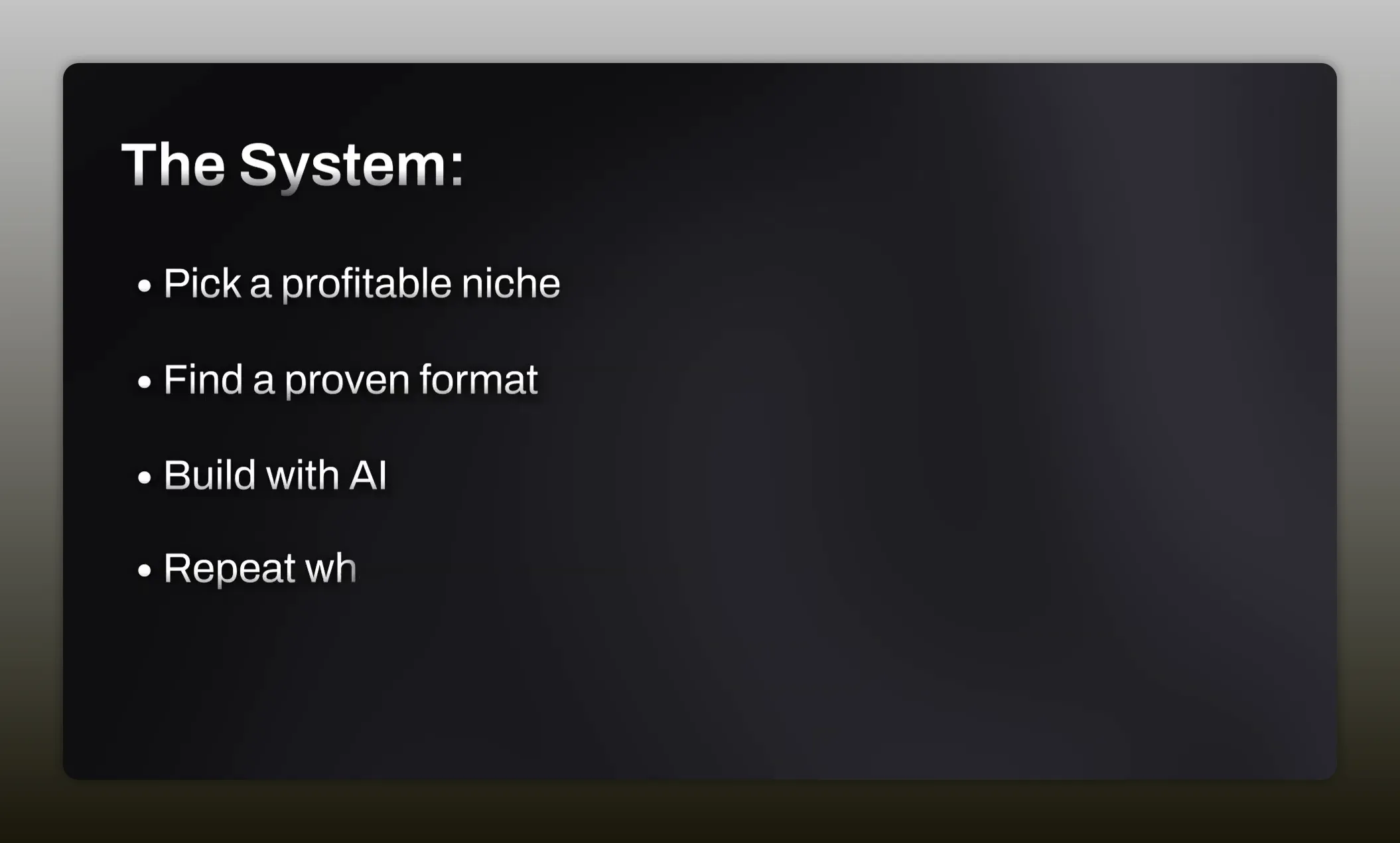
It comes down to four things:
- Pick a niche based on RPM, not just views.
- Find a format that is already proven and repeatable.
- Use AI to build the production pipeline.
- Repeat the format that works instead of reinventing every upload.
Most people only copy the visible part. They see the AI voice, the generated visuals, or the faceless editing style. Then they skip the decisions that make the channel viable in the first place.
Start With the Niche, Because Views Are Not the Same as Money
The first mistake happens before the first upload. People choose a topic because it seems interesting or because it gets views, then discover too late that the economics do not work.
Views do not equal revenue. RPM does.
RPM means revenue per thousand views, and it can vary massively depending on the subject. A history or true crime channel might generate roughly $25 to $30 RPM, while a parenting or kids channel might land closer to $2 to $4 RPM.
That means the same production effort can lead to completely different outcomes.
- A channel getting 1,500 views a day at a $4 RPM produces around $6 a day, or roughly $180 a month.
- A channel getting 12,000 views a day at a $28 RPM produces around $336 a day, or more than $10,000 a month.
That gap is the game. Do the math before choosing the topic, not after building 30 videos around it.
The goal is not to chase a magic RPM number. It is to understand the business model of a niche before committing to a format. A topic with lower ad revenue can still work, but it needs enough volume or a different monetization strategy. If the plan is primarily ad revenue, start by checking whether the topic gives you enough room to grow.
Find a Proven Format Instead of Inventing One
Once you have narrowed down a profitable topic, look for a format inside that niche that is already working.
This does not mean copying a specific video. It means identifying the repeatable shape of a successful channel and making your own version for new subjects.
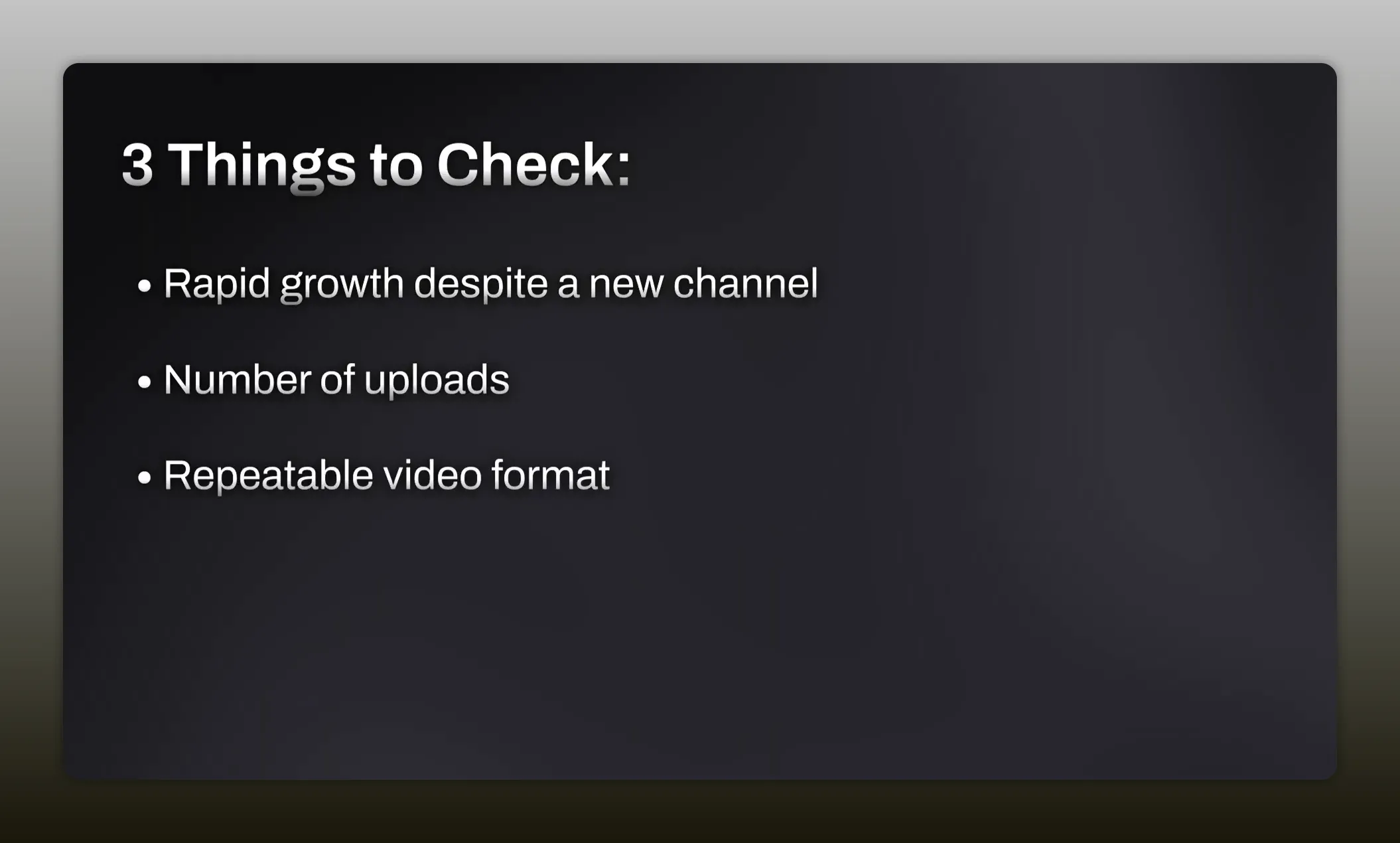
Use free research tools such as Social Blade or TubeBuddy to study a handful of channels in your niche. Look for three signals.
1. Rapid Growth Relative to Channel Age
A three-month-old channel with 40 uploads and a steep view curve is a much stronger signal than a five-year-old channel with one random viral hit.
You are looking for evidence that the channel has found something repeatable, not proof that it got lucky once.
2. A Meaningful Number of Uploads
Check how many videos the channel has published. A format that performs across dozens of uploads is far more useful than one hit with no follow-through.
3. A Repeatable Video Structure
Look at the thumbnails, video length, title style, opening structure, pacing, and visual approach. Do the videos feel like variations of the same machine, with a new subject plugged in each time?
That is what you want. The best faceless formats are not dependent on one brilliant, impossible-to-repeat idea. They are built around a clear structure that can keep producing useful, clickable videos.
Copy the proven shape, not the specific video.
Build the Faceless Video Pipeline With AI
AI is not the strategy. It is the production layer that makes a good strategy easier to execute consistently.
Once you have a niche and a proven format, the workflow can be broken into four parts: scripting, voiceover, visuals, and editing.
Draft Scripts From Proven Structural Examples
Instead of prompting an AI tool from a blank page, feed it several strong examples from your chosen format. A tool such as Claude can then draft new scripts in a structure that already works.
The important part is not asking for a generic script about a topic. It is giving the model enough reference material to understand the pacing, hook, sequence of ideas, and style you are trying to reproduce.
Turn the Script Into a Clean Voice Track
AI voice tools such as Murf or Play.ht can convert a finished script into a voice track in minutes.
The voice should serve the format, not distract from it. Clear delivery, sensible pacing, and consistent pronunciation matter more than trying to make it sound flashy.
Create Consistent Visual Scenes
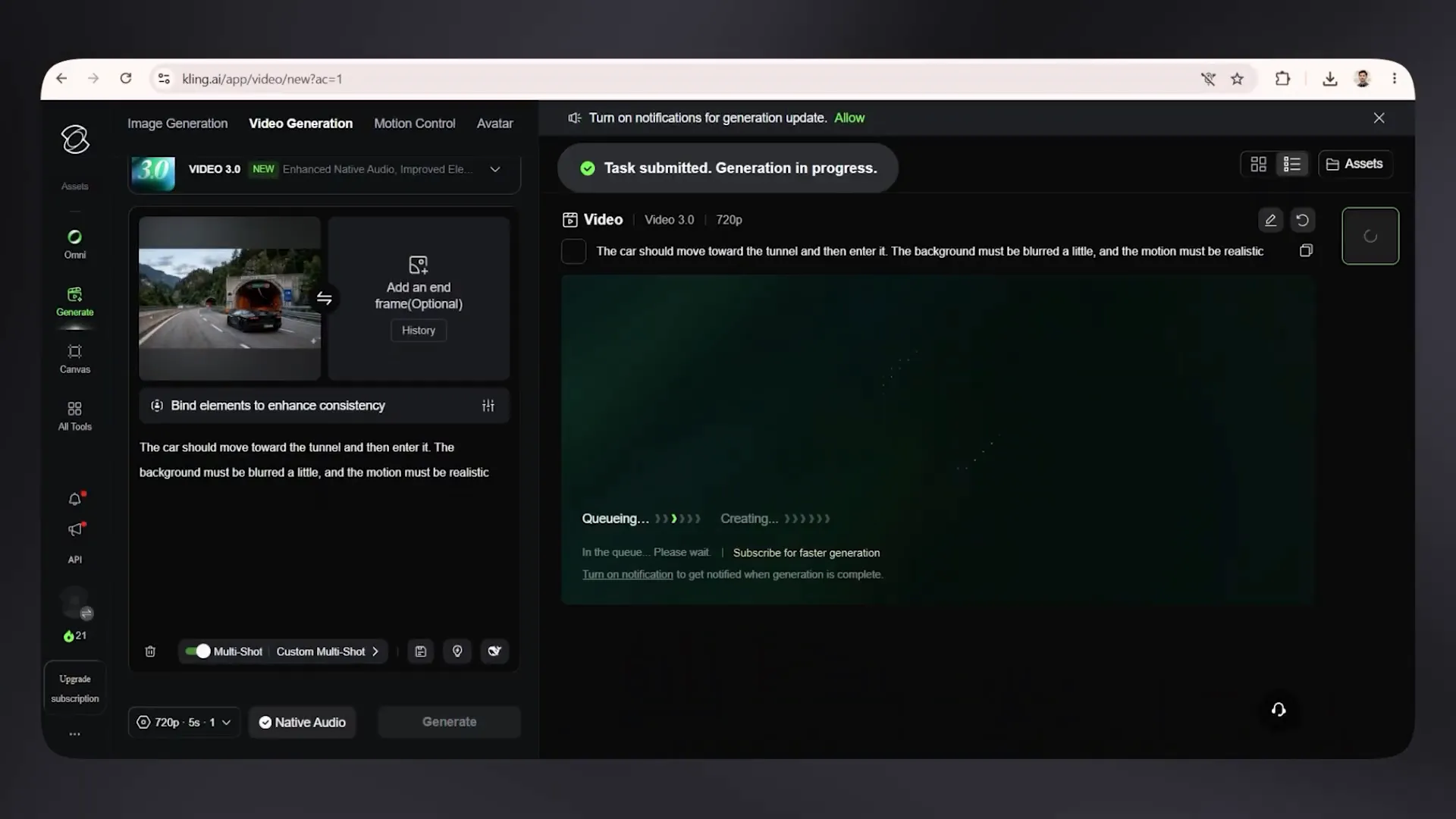
The visual side of AI video has improved dramatically. Tools such as Kling AI and other AI video generators can turn a script into scenes that maintain a consistent character or visual style from shot to shot.
That consistency matters. A faceless channel still needs an identity. If every scene feels disconnected, the content feels cheap no matter how good the script is.
Edit for Captions and Pacing
Use an editor such as CapCut to stitch together the voiceover and visuals, then add captions and pacing.
This is where the raw pieces become an actual video. Captions help make the message easier to follow, while pacing keeps the video moving rather than feeling like a slideshow of generated clips.
Once one workflow is working, many creators connect the steps with a no-code automation tool. The goal is not to remove all judgment. It is to make repetitive tasks, such as drafting, rendering, and scheduling, less manual.
Repeatability Is the Part Most People Skip
Repeatability can feel like cheating because it asks you to do less inventing. But that is exactly why it works.
If your first video performs, the next move is not to make something completely different. Keep the same:
- Core structure
- Thumbnail style
- Approximate length
- Packaging and pacing
Then change the subject.
One working idea can become 50 videos without requiring 50 unrelated concepts. That is how channels in this space are able to publish frequently. When the content and packaging are genuinely repeatable, posting more means producing more variations of a proven asset, not doing radically more work per video.
What the Big Income Claims Usually Leave Out
None of this means the results are instant.
The channels behind the biggest public numbers usually tested several subjects within their niche before finding one that took off. And when someone says they made a certain amount in 90 days, that clock often starts after they have already found the winning format, not on day one of a brand-new channel.
That does not make the system useless. It just means you should not confuse a successful format with a guaranteed outcome.
The practical framework remains the same:
- Pick a niche based on the math.
- Find a format with evidence that it works repeatedly.
- Build an efficient AI-powered production workflow.
- Double down on the subjects and packaging that perform.
That approach works whether the goal is six figures or simply building a channel that does not consume your entire week.
Turn a Winning Video Into More Than YouTube Traffic
A video that takes off should not be a one-platform asset.
The script and written content behind a successful upload can be repurposed into a blog post, giving the same idea a chance to attract search traffic beyond YouTube. Turning one proven topic into both a video and an article creates more places for people to discover the work.
The real advantage is not just AI automation. It is building a system where research, scripts, visuals, uploads, and repurposed written content all reinforce each other.
Choose the niche by the math. Model what already works. Use AI to produce efficiently. Repeat the winners. That is the faceless AI YouTube channel system worth understanding.


