Why Your YouTube Channel Isn’t Growing: 10 Mistakes to Fix
A channel that started in the same month as yours can end up four times bigger without the creator being more talented. Usually, the difference is simpler than that. They are avoiding a few obvious mistakes that quietly make it harder for YouTube to understand, recommend, and build momentum around your videos.
YouTube is not just judging whether a video is good. It is trying to work out which specific people should receive it. Every decision you make, from the audience you target to the final end screen, either makes that job easier or creates more friction.
Use these 10 mistakes as a practical YouTube growth checklist. The goal is not to make every upload perfect. It is to stop making the same avoidable errors that hold back otherwise solid channels.
1. Making Content for Everyone Instead of a Target Audience
The fastest way to confuse YouTube is to make videos that are meant for everybody.
A video aimed at complete beginners and experienced creators at the same time usually serves neither group well. Beginners need context and simple explanations. Experienced people want the useful part immediately. When the same video tries to do both, neither audience feels like it was made for them.
Niching down can feel like shrinking your potential audience, and in the short term, it does. But a smaller audience that reliably clicks and returns is far more valuable than a large, vague audience that does neither.
Once YouTube identifies a group that responds well to your content, it has a much easier time finding similar people. That is where sustainable reach comes from.
Fix: Define the person each video is for before choosing the topic. Be specific about their experience level, problem, and desired outcome.
2. Copying Big Creator Topics Instead of Their Strategy
It is tempting to find a huge video in your niche, make your own version, and expect similar results. Then it gets nowhere.
The issue is that big creators often succeed because of who already cares about them, not just because of the topic. A creator with a million subscribers can publish a breakdown of their personal finances because a million people have a reason to be interested in their money. A channel with 100 subscribers does not have that same built-in interest yet.
Take inspiration, but study the underlying mechanism rather than copying a title or topic word for word. Look at:
- How quickly they get to the main point
- What the thumbnail actually promises
- How they structure the first 30 seconds
- What makes the topic relevant to their existing audience
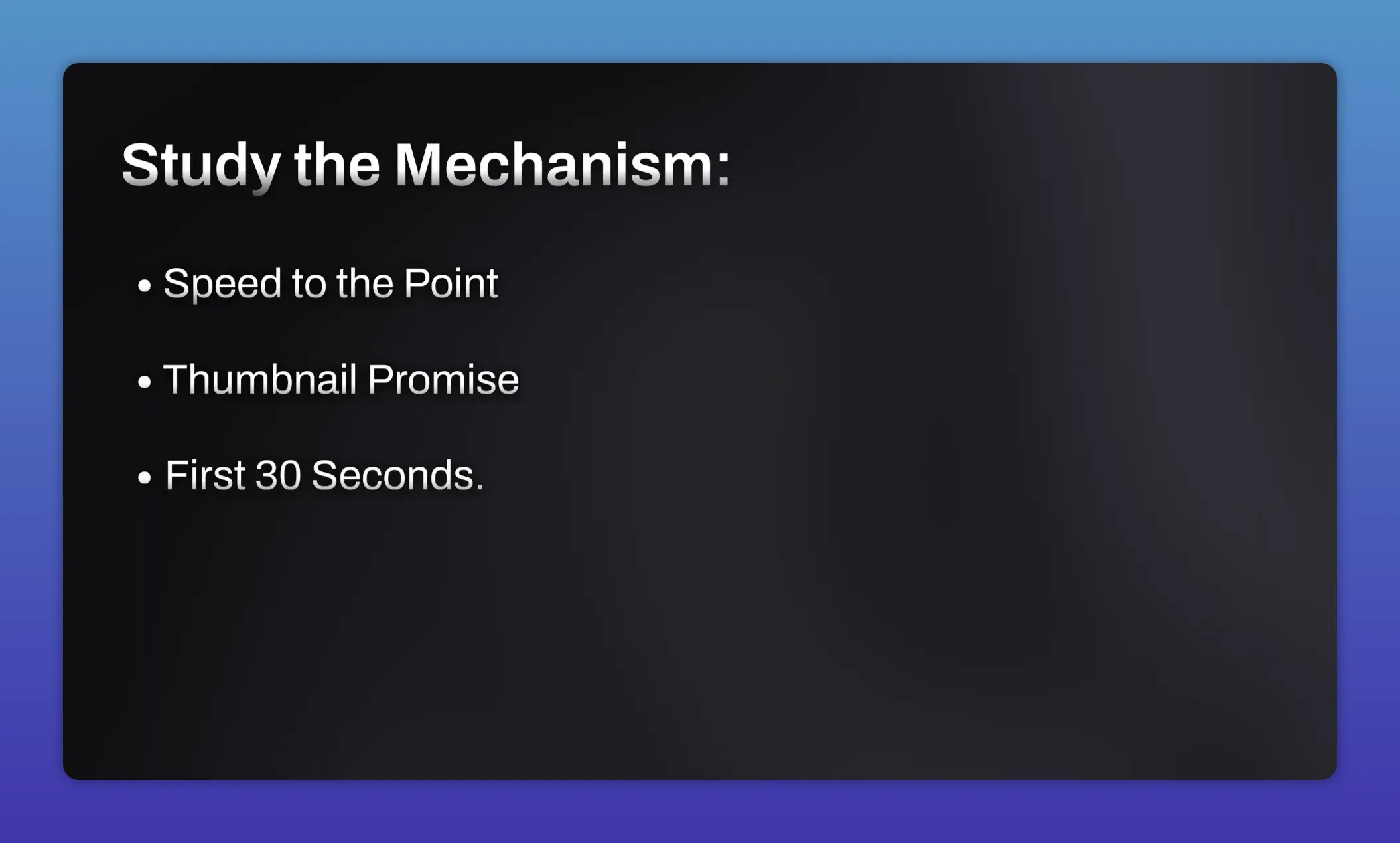
Trying to invent every part of your content from scratch is slower and usually worse. Learn from successful channels. Just copy the right thing.
3. Leaving Titles and Thumbnails Until the Last 10 Minutes
Most creators make the video first, upload it, then type the first title that comes to mind. That first title is rarely the best one.
Plan the title and thumbnail before filming. This forces the video itself to deliver on the promise made by its packaging. You know what the click is about, what the opening needs to confirm, and what payoff the rest of the video must provide.
Before publishing, check the thumbnail at actual grid size next to other videos. Ask:
- Is the text readable?
- Is the message punchy?
- Does it create a clear reason to click?
Click-through rate, or CTR, matters. Channels under 1,000 subscribers often see a 2% to 4% click-through rate, while 4% to 6% can be around average for more established channels. But do not chase CTR at the expense of the actual video.
A brilliant title and thumbnail attached to a weak idea simply gets more people to click and leave faster. That can do more damage than a low click rate. The packaging and the content have to make the same promise.
4. Burying the Hook and Delaying the Payoff
Your title made a promise. The click is someone trying to collect on that promise. Every second you spend before paying it out is another chance for them to leave.
This is where many channels lose a huge part of their audience. The classic problem is spending the first 90 seconds on a generic greeting, an introduction, or unrelated setup before finally getting into the topic.
The first 15 seconds should do two things:
- Confirm that the person is in the right place.
- Give one reason to stay for the rest.
Get to the point quickly. Then let your personality do the work. Personality is not the problem. Delaying the value is.
5. Publishing Randomly Without a Content Calendar
Random publishing is one reason another channel can pull ahead while putting in roughly the same amount of work.
If uploads appear at completely unpredictable times, there is no rhythm for your audience to recognise. A consistent publishing schedule gives people a reason to expect your next video instead of discovering it by accident.
YouTube Studio can show when your audience is most active. Use that information to choose a publishing time. Newer channels may not have enough data for this report yet, but testing different days and times can help you find the strongest slot.
For more detail on this report, refer to YouTube’s guidance on audience analytics in YouTube Studio.
Fix: Create a simple content calendar with a realistic frequency and a repeatable release time. Consistency does not mean posting constantly. It means setting expectations and meeting them.
6. Ending Videos on a Dead End
Do not treat the end of your video as an exit door. It is a chance to begin the next relevant session.
The important idea here is session time: the total time someone spends on YouTube after clicking your video, not only the minutes spent on that one upload. If someone closes the app immediately after finishing your video, that is a weak signal. It can affect more than one upload because it influences how aggressively the platform is willing to push your channel.
Long-form videos give you 20 seconds of end-screen space. Too many new creators leave it empty or fill it with two unrelated recommendations.
Instead, point toward one specific, relevant next video and say why it is worth clicking. Make the continuation obvious.
For example, if a video explains how to plan titles and thumbnails, the end screen could lead directly into a video about writing a stronger opening hook. The next step should feel natural, not random.
7. Editing for the Wrong Device
Most audiences consume YouTube on a phone. Text that looks sharp on a 27-inch editing monitor can become unreadable mush on a small screen. The same applies to detailed graphics, tiny captions, and small on-screen labels.
The device your audience uses also affects video length. Phone audiences generally sit through shorter videos, while TV audiences may be more willing to stay for longer ones.
You cannot optimise perfectly for both at once. Check the device breakdown in your analytics, then edit for the device most of your audience actually uses.
Fix: Watch the final export on your phone before publishing. Check every title card, overlay, graphic, and subtitle for legibility.
8. Giving Up While the Algorithm Is Still Testing
A new video is usually shown to a small group first. YouTube observes what happens, pulls back, and may test it again later with a slightly different group.
From your side, this can look like a spike followed by a collapse. That does not necessarily mean the video failed. It may simply still be finding the right audience.
Videos taking off weeks or even months after they are published is normal. It is not some rare fluke.
Do not abandon older videos too early. Revisit them, give them time, and test small title and thumbnail changes to see whether better packaging improves the response. If you have access, use YouTube’s thumbnail testing tools to compare options rather than changing everything based on a guess.
9. Changing Formats With Every Upload
When someone finishes a video and enjoys it, the natural next move is to search for another video like it. If everything else on the channel looks completely unrelated, there is nothing obvious to choose next.
The strongest channels usually repeat two or three recognisable formats, changing the subject each time. That does not mean every video is identical. It means the audience knows what kind of value they can expect.
Repeatable formats also help YouTube. Instead of trying to understand 20 unrelated experiments, the platform can recognise a pattern and connect it with the right audience.
Fix: Identify two or three formats that fit your niche and run them consistently. A tutorial series, a breakdown series, and a case-study series can provide variety without making the channel feel scattered.
10. Treating Published Videos as Finished Work
A published video can keep being shown to people for years, yet almost nobody goes back to improve it.
The problem is obvious once you think about it. A video published six months ago may have been packaged with less research, weaker title writing, and a less effective thumbnail than you would use today. Yet it is still collecting impressions with that old packaging attached.
Find videos with solid watch time but weak click-through rate. Those are often the easiest opportunities for extra traffic because the video already exists and there is already demand. Give them the title and thumbnail you would write today.
Published does not mean finished. It means the first version is live.
A Practical YouTube Growth Checklist
If your channel feels stuck, work through this list before producing the next batch of videos:
- Choose one clear target audience for each upload.
- Study successful creators for structure, not just topics.
- Plan the title and thumbnail before filming.
- Deliver on the promise immediately in the opening.
- Use a consistent publishing schedule and test timing.
- Send people to one relevant next video at the end.
- Edit for the device your audience uses most.
- Give older uploads time to find their audience.
- Build around a few repeatable formats.
- Refresh old videos with weak packaging and solid watch time.
Stop Comparing, Start Diagnosing
Go back to the channel you keep comparing yourself with, especially the one that started around the same time and is now miles ahead. Do not just look at their views. Look for the decisions they are making differently.
Are they clearer about who each video is for? Do their thumbnails make a sharper promise? Do they use repeatable formats, quicker hooks, better end screens, and a more consistent schedule?
Growth is rarely one secret trick. More often, it is the compound effect of making YouTube’s job easier and making the next click obvious for the right audience.


